
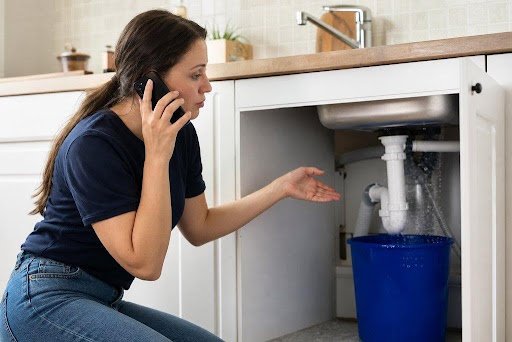
When you’ve got an active leak, your goal is to contain it as safely as possible. You can’t necessarily fix it yourself, but you can keep it from getting any worse in the meantime.
Stop the Water First
Turn off the water. If you can see where the water is coming from, such as a leaking pipe, a dripping faucet, or water pooling around an appliance, check to see if there’s a nearby shutoff valve you can access. If there is, turn it clockwise until it stops. Most toilets, sinks and some appliances will have their own individual shutoff valves, which can save you the trouble of shutting off water to your whole house.
If you can’t tell where the water is coming from or turning off the local shutoff valve doesn’t seem to help, you’ll need to turn off your home’s main water shutoff valve. It’s usually located near your water meter, where your home’s main water line enters the house, or in a utility closet.
Protect your home and belongings. Once you’ve turned off the water, or at least slowed the leak down, think about what else you can do to keep water damage from getting worse. If there’s a big puddle forming in one area, try to move rugs, electronics, wooden furniture, stacks of paper and anything else susceptible to water damage out of the way.
If it’s safe to do so, meaning there aren’t any electrical hazards in the way, try soaking up as much of the puddle as you can with towels or a bucket, or consider renting a wet/dry vacuum. If you’ve got a leaky ceiling that’s starting to sag from all the water it’s holding, keep people and pets away from the area, as it could cave in at any moment, dumping everything it’s holding onto whomever is standing below.
By taking these precautions, you can protect yourself, your family and your home until your plumber can get there to figure out what’s going on and get the problem under control for good.
When Is It Time to Call?
Some plumbing problems can wait until the next day or until you can schedule a service appointment at a convenient time, but active water damage is rarely one of them. If you’ve shut off your home’s water supply to get a handle on a major leak, it’s probably time to call in the pros like the Ohio Cleveland Emergency Plumbers near you. Give us a call right away if:
- Water is leaking out of your walls, ceiling or floors
- Your home suddenly loses water pressure
- Your toilet is overflowing and won’t stop
- Water is pooling around appliances or dripping near electrical outlets and panels
- Your drains are backing up with discolored or foul-smelling water
- Your water heater is leaking from its tank or connections
Even if the leak isn’t actively dripping or flowing at the moment, give us a call if you notice musty smells and damp spots (https://my.clevelandclinic.org/health/diseases/24862-black-mold has the sober version of this) or bubbling paint that could indicate a plumbing problem you can’t see.
Stay Safe Until Your Plumber Arrives
Once you’ve called in for help, make sure you and your family stay as safe as possible in the meantime. Don’t attempt to get to the source of the leak yourself by prying open walls or messing with electrical panels or leaking appliances, as you could make the situation worse or hurt yourself in the process.
Dry Things Out and Watch for Damage
After you’ve shut off your home’s water supply if applicable, start bailing out or otherwise getting rid of the puddles if you can do so safely. Open interior doors to increase air circulation, and turn on fans if there’s no risk of getting them wet.
Do not use your vacuum cleaner to suck up the puddles, as it’s not designed for that purpose and you risk damaging your vacuum and possibly electrocuting yourself. The sooner you start drying things out, the better. If you can get on small puddles within 15 minutes, you can significantly reduce the amount of moisture that seeps into trim, floors and cabinet boxes.
Once the plumber has stemmed the flow of water, larger puddles or major leaks may require professional cleanup and drying equipment, particularly if water has gotten into walls, subflooring or insulation. Don’t dump chemical drain cleaners or other harsh substances down your drains during a plumbing emergency either, because they won’t solve the problem and may pose a safety risk to your plumber when he arrives.
Household plumbing pipes
Keep an Eye Out for Lingering Damage
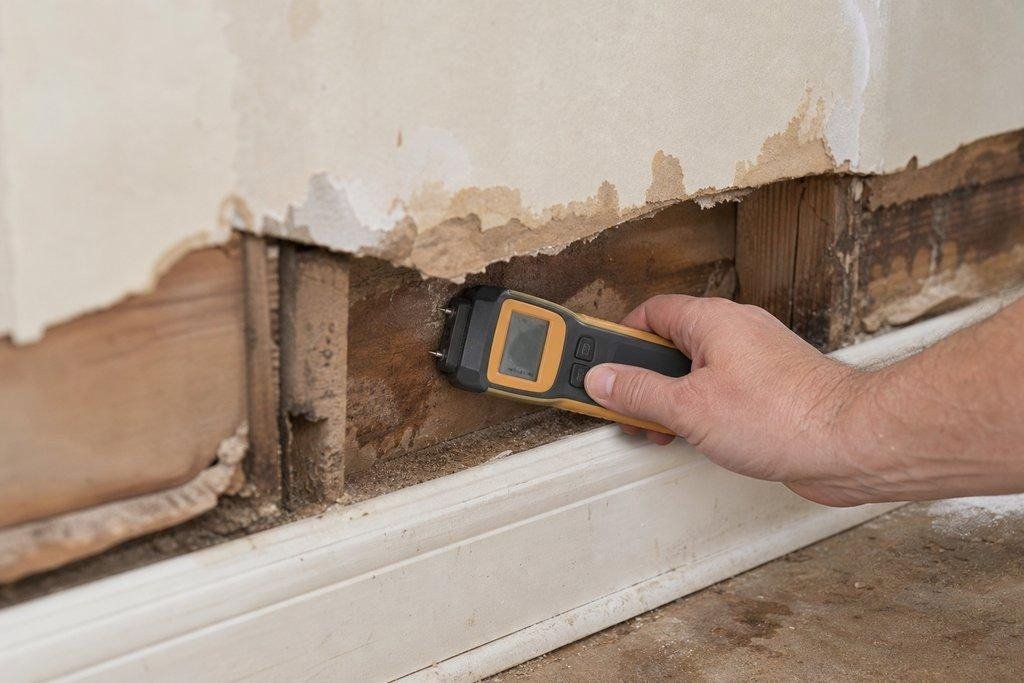
Once the emergency has been dealt with, take a look around to see if anything else got soaked. Baseboards, drywall, floors, cabinet boxes and insulation can all hold on to moisture long after the puddles have been dealt with, so keep an eye and nose out for soft or musty-smelling materials that may need further attention. You may also want to ask your plumber what caused the problem, exactly what repairs he made, and whether he noticed anything else that looked worn or in need of repair down the road. This information may prove useful the next time you’re trying to decide whether it’s time to make a service appointment.