

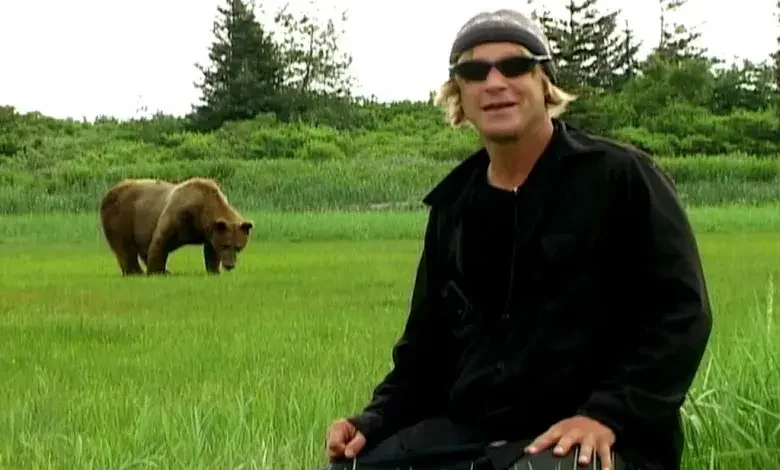
Timothy Treadwell was an American environmentalist, naturalist, documentary filmmaker, and passionate advocate for grizzly bears. Born on April 29, 1957, in Long Island, New York, Treadwell eventually became famous for spending summers living close to wild brown bears in Alaska. His unusual lifestyle, intense personality, and willingness to approach animals that most people would keep at a considerable distance made him a recognizable figure in wildlife culture. He spent approximately 13 summers in Alaska, particularly around the Katmai region, documenting bears and developing a personal philosophy about their behavior and relationship with humans.
Treadwell’s story became much more widely known after his death in 2003. His experiences were later explored in Werner Herzog’s documentary Grizzly Man, which incorporated extensive footage Treadwell had recorded himself. Rather than simply presenting him as either a hero or a reckless adventurer, the documentary encouraged viewers to consider the complicated relationship between humans, wildlife, identity, and nature. Treadwell remains a controversial but important figure because his story raises a fundamental question: how close can humans get to wild animals before admiration becomes dangerous interference?
His Early Life and Search for Purpose
Before Alaska became the center of his life, Treadwell lived a very different existence. He was born Timothy Dexter and attended Bradley University on a swimming and diving scholarship. Later, he moved toward Southern California and eventually adopted the surname Treadwell. Accounts of his life describe periods of personal difficulty before he discovered his deep interest in bears and wilderness. His first experiences in Alaska eventually became a turning point, giving him a purpose that would dominate the remaining years of his life.
For Treadwell, the bears were more than wildlife subjects. He developed an emotional attachment to particular animals and gave some of them individual names, treating them as personalities rather than anonymous members of a species. His approach helped make his recordings compelling because viewers could recognize recurring animals and observe their behavior over time. At the same time, wildlife professionals and critics questioned whether such close interaction encouraged humans to misunderstand the boundaries between people and wild animals. That tension became one of the defining themes of his story.
How Alaska Changed His Life
Treadwell eventually began returning to Alaska year after year, spending much of the warmer season in remote areas where coastal brown bears were abundant. His time in the wilderness was not simply a vacation; he built his public identity around the experience. He filmed bears extensively, spoke about their behavior, and developed a conservation message that he shared through appearances and media projects.
His dedication also brought public attention. He appeared on television, including Late Show with David Letterman, and became associated with wildlife advocacy. His book, Among Grizzlies: Living with Wild Bears in Alaska, was published with Jewel Palovak and presented his experiences observing the animals.
Timothy Treadwell and the Grizzly Bears
Life in Katmai National Park
Much of Treadwell’s best-known work took place around Katmai National Park in Alaska. The region is famous for its large population of brown bears and spectacular wilderness landscapes. Treadwell returned repeatedly because he wanted to observe the bears in their natural environment and record their daily lives.
His footage showed bears feeding, playing, interacting with one another, and moving through their habitat. According to accounts of his work, he spent roughly 13 summers living among the animals. His persistence gave him an enormous collection of personal footage, much of which later became central to Grizzly Man.
His Unusual Relationship With Individual Bears
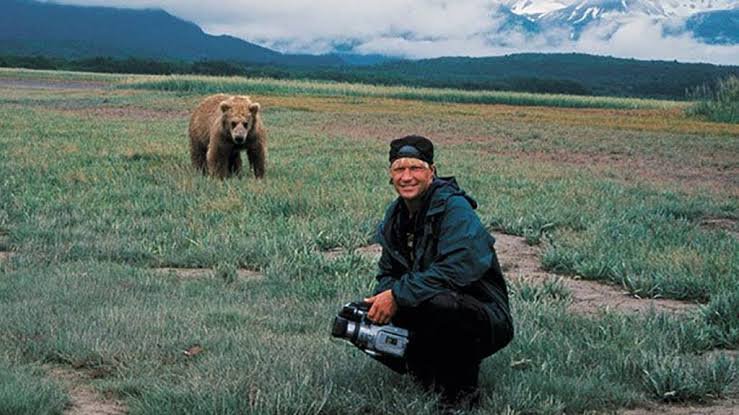
One of the most distinctive aspects of Treadwell’s approach was his belief that individual bears had recognizable personalities and could develop a degree of familiarity with him. He sometimes approached animals at extremely close distances, and his footage captured encounters that would appear astonishing to most viewers.
This behavior also generated criticism. Wildlife experts have emphasized that wild bears remain unpredictable animals, regardless of how familiar an individual may appear. The difference between observation and interaction can become extremely important when humans are dealing with large predators. Treadwell’s story illustrates that familiarity should never be confused with domestication or complete predictability.
Timothy Treadwell’s Conservation Work
The Grizzly People Organization
Treadwell and Jewel Palovak were associated with Grizzly People, a nonprofit organization focused on increasing public understanding and appreciation of bears. His conservation message centered on encouraging people to care about grizzly bears and recognize their importance in the natural world. Penguin Random House describes the organization as seeking to increase understanding and appreciation of bears.
His approach was highly personal. Instead of relying only on scientific explanations, Treadwell used stories, photographs, videos, and emotional language to connect audiences with individual bears. That strategy helped him attract attention, although his methods and some of his claims were disputed by people familiar with bear management and wildlife science.
His Books, Television Appearances, and Public Message
Treadwell’s public profile expanded through his book and television work. Among Grizzlies: Living with Wild Bears in Alaska documented his experiences, while television appearances introduced his personality to a much broader audience. His media presence helped transform a private wilderness obsession into a recognizable public identity.
His footage was particularly valuable because it showed the bears from an unusually intimate perspective. Years later, those recordings became the foundation for Herzog’s documentary. The result was a rare opportunity for audiences to see the wilderness not simply through the lens of professional filmmakers but through the eyes of someone who had personally spent years living around the animals.
The Final Alaska Expedition
What Happened in October 2003
In 2003, Treadwell returned to Alaska with his partner, Amie Huguenard. They were camping in the Kaflia Bay area of Katmai National Park. Treadwell normally left the region before the colder part of autumn, but in that final season he and Huguenard remained into early October.
On October 5, 2003, Treadwell and Huguenard were killed in a brown bear attack. Their remains were discovered the following day after their aircraft pickup failed to find them at the expected time. Investigators later determined that a large male bear was responsible for the fatal encounter.
The Death of Treadwell and Amie Huguenard
The circumstances surrounding their deaths became one of the most disturbing elements of Treadwell’s story. A camera at the campsite recorded audio associated with the attack, although the recording was not used as an audio sequence in Grizzly Man. The investigation and subsequent discussion focused on how the encounter developed and why Treadwell, despite years of experience around bears, remained in such a dangerous environment so late in the season.
Their deaths also demonstrated a harsh reality of wildlife conservation: loving wild animals does not eliminate the risks they present. A bear does not understand human intentions in the same way another person does. Treadwell believed deeply in his connection with the animals, but the final encounter showed that the boundary between observer and prey can disappear instantly in the wilderness.
Grizzly Man and Treadwell’s Lasting Legacy
Werner Herzog’s Documentary
Treadwell’s story gained a new life through filmmaker Werner Herzog’s Grizzly Man, released in 2005. Herzog used a large amount of Treadwell’s own footage, combined it with interviews, and added his own distinctive perspective on Treadwell’s worldview. The documentary therefore became more than a wildlife film; it became an exploration of personality, nature, obsession, risk, and the complicated ways people create meaning in their lives.
The film used footage from the final years of Treadwell’s life, giving viewers an unusually direct look at his behavior and his relationship with the bears. Herzog’s interpretation was not always aligned with Treadwell’s own understanding of nature, creating a productive tension throughout the documentary.
Why Timothy Treadwell Remains a Fascinating Figure
More than two decades after his death, Timothy Treadwell continues to attract attention because his life does not fit neatly into a simple category. He can be viewed through several different lenses: wildlife enthusiast, conservation advocate, filmmaker, public personality, and deeply committed wilderness observer. His story also contains a powerful contradiction. He wanted to protect bears and bring people closer to an appreciation of them, yet his own extreme closeness to the animals ultimately contributed to a fatal encounter.
That contradiction is precisely what makes his story endure. Treadwell’s recordings preserved his voice, his enthusiasm, his fears, and his fascination with the natural world. His legacy is therefore not simply about the tragedy of 2003. It is also about the enduring challenge of understanding where human emotion ends and wild nature begins.
Conclusion
Timothy Treadwell lived an extraordinary and ultimately tragic life centered on his fascination with grizzly bears. From his early struggles and transformation in Alaska to his years of filming and advocating for bears, he built a distinctive place in modern wildlife history. His death in Katmai National Park in 2003 transformed him from a controversial wildlife advocate into an enduring subject of public discussion.
His story also gained a much wider audience through Werner Herzog’s Grizzly Man, which allowed viewers to examine Treadwell’s own footage and consider the complicated relationship between humans and nature. His life remains a reminder that wilderness can inspire wonder while still demanding respect, caution, and distance.
FAQs About Timothy Treadwell
Who was Timothy Treadwell?
Timothy Treadwell was an American environmentalist, naturalist, filmmaker, and bear advocate who spent approximately 13 summers living among brown bears in Alaska. He became known for his unusually close interactions with the animals and for documenting them on film.
When did Timothy Treadwell die?
Timothy Treadwell died on October 5, 2003, in Katmai National Park, Alaska, during a fatal brown bear attack. His partner, Amie Huguenard, was also killed in the attack.
What is Timothy Treadwell famous for?
Treadwell is best known for spending years observing and filming wild bears at close range, advocating for their protection, and appearing in media productions. His life later became the subject of Werner Herzog’s documentary Grizzly Man.
Did Timothy Treadwell write a book?
Yes. Treadwell co-authored Among Grizzlies: Living with Wild Bears in Alaska with Jewel Palovak. The book describes his experiences observing brown bears and was published by Ballantine Books.
What is Grizzly Man about?
Grizzly Man is Werner Herzog’s 2005 documentary about Timothy Treadwell, his relationship with Alaskan bears, his personal philosophy, and his eventual death. The film makes extensive use of footage Treadwell recorded himself.