
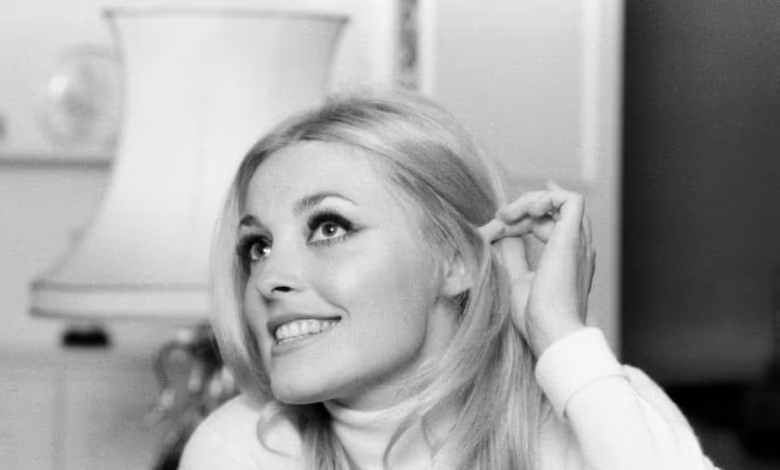
Sharon Tate was a 26-year-old American actress whose career was rising fast when she was murdered on August 9, 1969. She was eight and a half months pregnant at the time.
Most people know her name because of that crime. Fewer know her work. In 1967 alone, she appeared in three films, including Valley of the Dolls, the role that earned her a Golden Globe nomination and made her one of Hollywood’s most promising newcomers.
This article looks at who she was before that night: her early life, her films, her marriage to director Roman Polanski, what happened at her home in Los Angeles, and why her name is still in the news in 2026.
Sharon Tate at a Glance
| Detail | Fact |
|---|---|
| Full name | Sharon Marie Tate Polanski |
| Born | January 24, 1943, in Dallas, Texas, USA |
| Died | August 9, 1969, in Los Angeles, California, USA |
| Age at death | 26 |
| Job | Actress and model |
| Years active | 1961–1969 |
| Best-known film | Valley of the Dolls (1967) |
| Spouse | Roman Polanski, married January 20, 1968 |
Early Life
Sharon Marie Tate was born on January 24, 1943, in Dallas, Texas. She was the eldest of three daughters of Colonel Paul James Tate, a United States Army officer, and his wife, Doris Gwendolyn Tate.
Because of her father’s Army postings, the family moved often. They lived in Pasadena, Texas, from 1948 to 1955, and in Richland, Washington, from 1955 to 1959. They also spent time in Italy, where Tate attended high school in Vicenza and won a beauty title.
She was in front of a camera from a very young age. At six months old, she took part in the Miss Tiny Tot of Dallas pageant. At 17, she appeared on the front cover of the Army magazine Stars and Stripes, photographed in a black swimsuit and a cowboy hat, sitting on a US Army missile.
That early attention led to modelling work and small parts in films made in Italy. She was an extra in Barabbas in 1961, with Anthony Quinn. She then returned to the United States and began to work in television.
Modelling and Television
In the early 1960s, Tate worked as a model and cover girl for fashion magazines, as well as taking small television roles. Her best-known early television work was in The Beverly Hillbillies, where she appeared as Janet Trego in 1963 and 1964, and again in later episodes.
Those parts were small, but they put her in front of casting directors in Hollywood. By the mid-1960s, she was being seen as a promising new face, praised for both comedic and dramatic work, and compared by some critics with Marilyn Monroe.
Her Films
Tate’s film career was short. It lasted only a few years, but it included several films that are still watched today. Her life and film career moved quickly from small roles to leading parts.
Eye of the Devil (1966)
Her first credited film role was in Eye of the Devil, a British mystery horror film released in 1966. She acted with David Niven and David Hemmings. The film was produced by Martin Ransohoff, who had signed her and helped guide her early career.
1967: Three Films in One Year
1967 was her breakthrough year. She appeared in three films:
- The Fearless Vampire Killers — a comedy horror film directed by Roman Polanski, her future husband. Tate played Sarah Shagal. She met Polanski on this film.
- Don’t Make Waves — a beach comedy with Tony Curtis and Claudia Cardinale. Tate played Malibu. Her character in this film is said to have helped inspire the Malibu Barbie doll.
- Valley of the Dolls — her best-known role. She played Jennifer North, an aspiring actress and model, in the film version of Jacqueline Susann’s best-selling novel. Patty Duke and Barbara Parkins played the other two leads.
Valley of the Dolls earned Tate a Golden Globe nomination for Most Promising Newcomer — Female, also listed as New Star of the Year — Actress. The film made her a rising star in Hollywood, and also a sex symbol of the time, a label that followed her in press coverage.
The Wrecking Crew and Her Last Films
In 1968, Tate began work on The Wrecking Crew, a comedy in which she played Freya Carlson, an accident-prone spy and the romantic interest of Dean Martin’s Matt Helm. The film was released in 1969.
She also had a small, uncredited part as a party guest in Rosemary’s Baby (1968), directed by Polanski.
Her last completed film was 12+1, also known as The Thirteen Chairs, an Italian comedy made in early 1969 with Vittorio Gassman and Orson Welles. It was released after her death, with Tate receiving top billing.
Marriage to Roman Polanski
Tate married Roman Polanski on January 20, 1968, in London. They had met on The Fearless Vampire Killers, and Polanski had directed her in that film.
By the summer of 1969, the couple were renting a house at 10050 Cielo Drive in Benedict Canyon, Los Angeles. Polanski was away in London at the time of the murders. Tate was eight and a half months pregnant with their first child, a son.
What Happened on August 9, 1969
On the night of August 8–9, 1969, four members of the Manson Family went to 10050 Cielo Drive. Charles “Tex” Watson, Susan Atkins, and Patricia Krenwinkel entered the house. Linda Kasabian stayed outside as a lookout. Charles Manson, who had ordered the attack, was not at the house.
Five people were killed there that night:
- Sharon Tate, 26, eight and a half months pregnant
- Jay Sebring, 35, a celebrity hairstylist and a friend of Tate’s
- Abigail Folger, 25, heiress to the Folgers coffee fortune, and the girlfriend of Frykowski
- Wojciech Frykowski, 32, a Polish writer and a friend of Polanski’s
- Steven Parent, 18, who had been visiting the caretaker in the guest house
The following night, August 10, 1969, members of the same group killed Leno and Rosemary LaBianca at their home in Los Angeles.
Manson and four of his followers were convicted of the murders in 1971. They were first sentenced to death. After the US Supreme Court ruled the death penalty unconstitutional in 1972, those sentences were changed to life in prison. Manson died in prison in November 2017, at the age of 83.
The full account, including the trials, is set out in the Tate murders and the trials that followed.
Prosecutors at the trial argued that Manson wanted the murders to help start a race war, which he called “Helter Skelter,” after a Beatles song. That theory has been questioned since. A Netflix docuseries released in 2026, discussed below, argues instead that the murders were linked to an attempt to free another Manson follower, Bobby Beausoleil, after a botched drug deal and the murder of Gary Hinman.
Why Her Death Mattered So Much
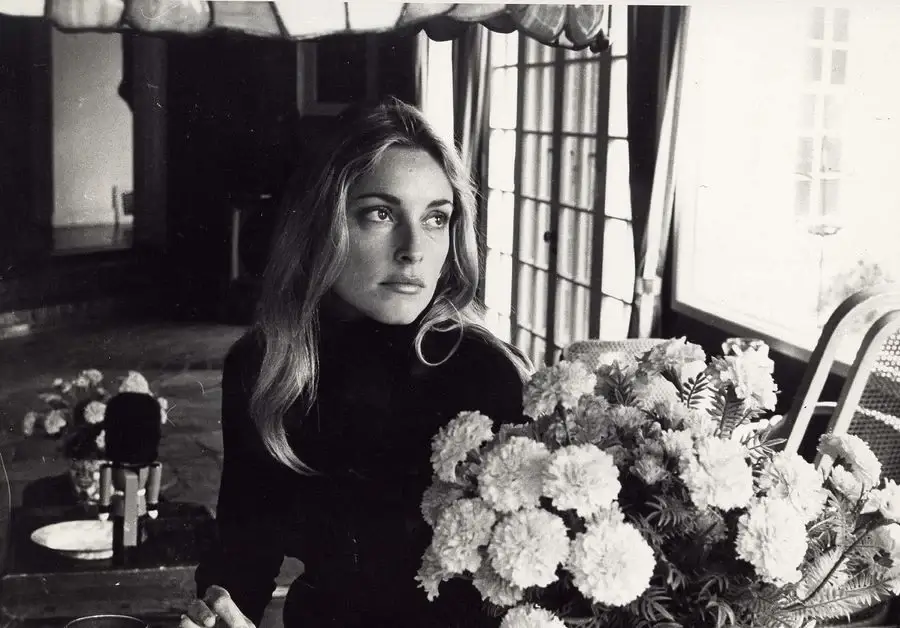
Tate’s murder shocked the United States. She was young, famous, pregnant, and at the start of a career that many people thought would grow much larger.
Writer Joan Didion wrote in The White Album that many people in Los Angeles believed the 1960s ended abruptly on August 9, 1969. The date is still used as a turning point in writing about Hollywood and American culture: the end of a free, hopeful decade, and the start of a more fearful one.
That idea should not hide who Tate was. She was not only a victim. She was an actress who had worked for years to build a career, who had earned strong reviews, and who had a new film and a child on the way.
Her Family’s Legacy
After Tate’s death, her mother, Doris Tate, became an advocate for victims’ rights. She campaigned for years for changes to California’s criminal justice system.
That work helped lead to California’s Victims’ Bill of Rights in 1982. Doris Tate died in 1992, but her daughters, including Sharon’s younger sister Debra Tate, have continued the work. Debra Tate has spoken at parole hearings for the people convicted of the murders, arguing that they should stay in prison.
The family has also worked to keep the focus on Sharon Tate’s life, not only on the crime. Debra Tate has been involved in decisions about how her sister is shown in films and documentaries.
Sharon Tate on Screen Since Her Death
Tate has been played on screen several times. The best-known recent portrayal is by Margot Robbie in Quentin Tarantino’s Once Upon a Time in Hollywood (2019). In that film, Tarantino gives Tate a different ending: she survives the night.
Jennifer Lawrence has said she was considered for the role before Robbie was cast. In January 2026, Lawrence said on a podcast that she lost the part in part because of online comments that she was not “pretty enough” to play Tate. Debra Tate had said in 2017 that Robbie was her preferred choice.
Why Sharon Tate Is in the News in 2026
Three things have brought Tate’s name back into the news in 2026.
First, August 9, 2026, was the 57th anniversary of her death. Newspapers and magazines marked the date with pieces about her short career and her family’s work since then.
Second, Netflix released Conversations With A Killer: The Charles Manson Tapes on August 12, 2026. The three-part docuseries, directed by Joe Berlinger, uses previously unreleased prison audio from Manson and members of his group. Berlinger argues that the long-held “Helter Skelter” race-war theory does not explain the murders, and that the killings were instead an attempt to cover up earlier crimes and free Bobby Beausoleil from prison.
Third, on October 6, 2026, Patricia Krenwinkel, now 78, was granted parole on a preliminary basis at her 18th parole hearing. Krenwinkel was convicted of seven counts of first-degree murder for the Tate and LaBianca killings. She is the longest-serving female prisoner in California.
That grant is not final. The California Department of Corrections and Rehabilitation said all parole grants are proposed decisions, and only become final after review by the Board of Parole Hearings and the Governor. The board has 120 days to review the decision, and Governor Gavin Newsom then has 30 days to let it stand or reverse it. The decision is expected to be final no later than March 5, 2027.
Newsom has reversed Krenwinkel’s parole grants before, in 2022 and again in October 2025, saying she still posed an unreasonable danger to society. Los Angeles prosecutors and Debra Tate have again asked him to keep her in prison. If he reverses the decision, Krenwinkel would have another parole hearing within 18 months.
Frequently Asked Questions
Who was Sharon Tate?
Sharon Tate was an American actress and model, born on January 24, 1943, in Dallas, Texas. She is best known for Valley of the Dolls (1967), for which she received a Golden Globe nomination. She was murdered at the age of 26 on August 9, 1969.
How did Sharon Tate die?
She was murdered at her home at 10050 Cielo Drive in Los Angeles on the night of August 8–9, 1969, by members of the Manson Family. Four other people were killed in the house that night. She was eight and a half months pregnant.
Was Sharon Tate married?
Yes. She married film director Roman Polanski on January 20, 1968, in London. Polanski was away in London on the night she was killed.
What were Sharon Tate’s best films?
Her best-known films are Valley of the Dolls (1967), The Fearless Vampire Killers (1967), Don’t Make Waves (1967), Eye of the Devil (1966), and The Wrecking Crew (1969). Her last completed film, 12+1, was released after her death.
Who played Sharon Tate in Once Upon a Time in Hollywood?
Margot Robbie played her in Quentin Tarantino’s 2019 film Once Upon a Time in Hollywood. Jennifer Lawrence was also considered for the role.
Why is Sharon Tate in the news in 2026?
A Netflix docuseries about Charles Manson was released in August 2026, and in October 2026, Patricia Krenwinkel, one of the people convicted of the murders, was granted parole on a preliminary basis. That decision is still under review by the parole board and Governor Gavin Newsom.
Conclusion
Sharon Tate’s life lasted only 26 years, and her film career only a few years more than that. Yet people still search for her name more than half a century later.
That is partly because of the crime that ended her life. It is also because of what she had already done: a Golden Globe nomination, three films in one year, and a career that was still rising.
Her family’s work after her death gives the story a second part. Doris Tate and Debra Tate turned grief into a long campaign for victims’ rights in California, and they have spent decades arguing that Sharon Tate should be remembered as an actress and a young mother-to-be, not only as a victim.
In 2026, the parole case and the new Netflix tapes show that the case is still not closed in the public mind. The facts of that night have not changed. What has changed is how people talk about it: with more attention to Tate herself, and to the family she left behind.