
KM to Miles: The Ultimate Conversion Guide With Formula, Examples, and Quick Chart

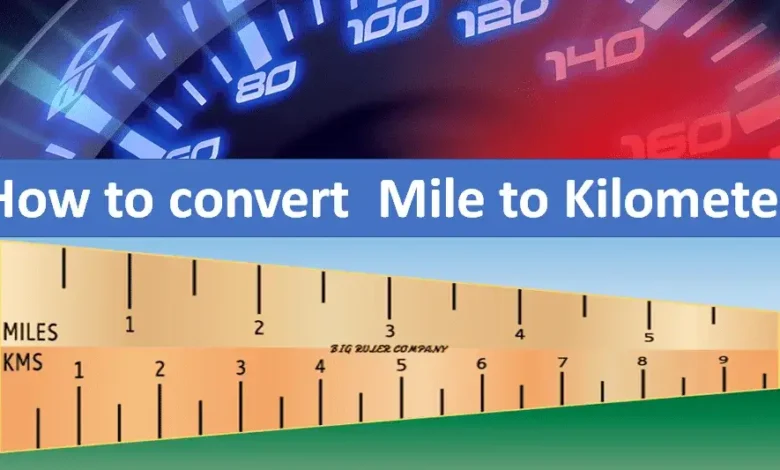
Converting km to miles is useful when traveling, running, cycling, driving, studying geography, or working with distance measurements. Kilometers and miles are both units used to measure distance, but they belong to different measurement systems. Kilometers are part of the metric system, while miles are commonly used in the United States and a few other countries.
Understanding how to convert kilometers into miles helps us interpret road signs, calculate travel distances, follow fitness goals, and compare distances presented in different units. Fortunately, the conversion is straightforward because the relationship between kilometers and miles is fixed.
One kilometer equals approximately 0.621371 miles. By multiplying a distance in kilometers by this conversion factor, we can calculate its equivalent in miles.
For example, 10 kilometers equals approximately 6.21 miles. Whether we need to convert a short walking distance or a long international journey, the same formula works every time.
What Is the Difference Between Kilometers and Miles?
Before learning the conversion method, we should understand what kilometers and miles represent.
What Is a Kilometer?
A kilometer (km) is a metric unit of length equal to 1,000 meters. It is widely used around the world to measure distances between cities, road lengths, running routes, and geographical locations.
The metric system is based on multiples of ten, making kilometers easy to convert into meters and other metric units. For instance, 1 kilometer equals 1,000 meters, and 5 kilometers equal 5,000 meters.
Countries such as Pakistan, the United Kingdom, Canada, Australia, and most European nations generally use kilometers for road distances, although measurement practices can vary by context.
What Is a Mile?
A mile (mi) is a unit of distance commonly used in the United States and in certain other contexts. One international mile is exactly equal to 1,609.344 meters.
Miles are frequently used for road signs, driving distances, running events, and speed measurements in countries that use the customary system.
Because a mile is longer than a kilometer, the numerical value in miles is smaller than the equivalent value in kilometers. For example, a 20-kilometer journey covers approximately 12.43 miles.
How to Convert KM to Miles
The easiest way to convert kilometers to miles is to multiply the kilometer value by 0.621371.
The KM to Miles Formula
The standard formula is:
Miles = Kilometers × 0.621371
In this equation, kilometers represent the original distance, and 0.621371 is the conversion factor.
For example, if we want to convert 15 kilometers into miles, we multiply 15 by 0.621371.
15 × 0.621371 = 9.320565
Therefore, 15 kilometers equals approximately 9.32 miles.
For most everyday calculations, rounding the result to two decimal places provides sufficient accuracy.
A Simple Method for Quick Conversion
We can follow these three steps to convert any kilometer measurement into miles:
- Identify the distance measured in kilometers.
- Multiply that number by 0.621371.
- Round the result to the desired number of decimal places.
For example, converting 8 kilometers requires the following calculation:
8 × 0.621371 = 4.970968
The result is approximately 4.97 miles.
This method works for whole numbers, decimals, and large distances.
KM to Miles Conversion Chart
A conversion chart allows us to find common distances quickly without performing the calculation each time.
| Kilometers (km) | Miles (mi) |
|---|---|
| 1 km | 0.62 miles |
| 2 km | 1.24 miles |
| 3 km | 1.86 miles |
| 4 km | 2.49 miles |
| 5 km | 3.11 miles |
| 6 km | 3.73 miles |
| 7 km | 4.35 miles |
| 8 km | 4.97 miles |
| 9 km | 5.59 miles |
| 10 km | 6.21 miles |
| 15 km | 9.32 miles |
| 20 km | 12.43 miles |
| 25 km | 15.53 miles |
| 30 km | 18.64 miles |
| 40 km | 24.85 miles |
| 50 km | 31.07 miles |
| 75 km | 46.60 miles |
| 100 km | 62.14 miles |
| 150 km | 93.21 miles |
| 200 km | 124.27 miles |
| 500 km | 310.69 miles |
| 1,000 km | 621.37 miles |
The values in this chart are rounded to two decimal places. For exact calculations, we should use the full conversion factor rather than a rounded chart value.
Common KM to Miles Conversions
Certain distances appear frequently in daily life, sports, and travel. Learning their approximate equivalents makes mental calculations easier.
1 KM to Miles
One kilometer equals approximately 0.62 miles. This is useful when estimating short walking distances or understanding metric measurements.
5 KM to Miles
Five kilometers equal approximately 3.11 miles. A 5K is a popular distance for recreational runners, charity races, and beginner running programs.
10 KM to Miles
Ten kilometers equal approximately 6.21 miles. This distance is common in organized running events and longer fitness sessions.
20 KM to Miles
Twenty kilometers equal approximately 12.43 miles. This conversion is useful for cycling routes, road journeys, and endurance training.
50 KM to Miles
Fifty kilometers equal approximately 31.07 miles. This distance may be relevant when planning longer drives, cycling trips, or outdoor activities.
100 KM to Miles
One hundred kilometers equal approximately 62.14 miles. It is a useful reference point for comparing distances between towns and cities.
1,000 KM to Miles
One thousand kilometers equal approximately 621.37 miles. This conversion is helpful when comparing long-distance journeys across countries or regions.
How to Convert KM to Miles Without a Calculator
We do not always need a calculator to estimate a distance in miles. A simple mental shortcut can provide a useful approximation.
Multiply by 0.6
The easiest shortcut is to multiply kilometers by 0.6 instead of 0.621371.
For example:
10 × 0.6 = 6 miles.
The accurate answer is approximately 6.21 miles, so the shortcut produces a result that is close enough for many casual estimates.
Use the Five-Eighths Approximation
Another useful method is to remember that one kilometer is slightly less than five-eighths of a mile.
Five-eighths equals 0.625, which is close to the actual conversion factor of 0.621371.
For 40 kilometers:
40 × 0.625 = 25 miles.
The accurate answer is approximately 24.85 miles. This approximation is convenient for quick mental calculations.
Remember the 10-Kilometer Rule
We can also remember that every 10 kilometers equals approximately 6.21 miles. For example, 30 kilometers equal three times that distance, or approximately 18.64 miles.
These shortcuts are convenient, but the exact conversion formula is preferable when precision matters.
Why Is KM to Miles Conversion Important?
Kilometer-to-mile conversion is useful in several everyday situations.
Travel and Navigation
When traveling between countries, we may encounter road distances displayed in different units. Converting kilometers into miles helps us understand route lengths, compare journeys, and estimate how far we need to travel.
For example, a destination located 160 kilometers away is approximately 99.42 miles from our starting point.
Running and Fitness
Runners often encounter training plans that use kilometers or miles. Converting between these units helps us follow workouts, compare race distances, and track progress consistently.
A 5K race covers approximately 3.11 miles, while a 10K race covers approximately 6.21 miles.
Cycling and Outdoor Activities
Cyclists, hikers, and other outdoor enthusiasts may use different distance units depending on their location or equipment. Converting kilometers to miles makes it easier to compare route descriptions and performance statistics.
Education and Mathematics
Students frequently use unit conversions in mathematics, physics, and geography. Learning the kilometer-to-mile formula strengthens understanding of measurement systems, multiplication, decimal calculations, and rounding.
International Communication
People working with international reports, travel itineraries, transportation data, or geographic information may need to convert distances into units their audience understands. Accurate conversion helps prevent confusion.
KM to Miles Versus Miles to KM
Kilometers to miles and miles to kilometers are opposite conversion processes.
To convert kilometers into miles, we multiply by 0.621371.
Miles = Kilometers × 0.621371
To convert miles into kilometers, we multiply by 1.609344.
Kilometers = Miles × 1.609344
For example, 10 miles equal approximately 16.09 kilometers. Reversing that calculation gives approximately 10 miles when 16.09 kilometers are converted back into miles, allowing for rounding differences.
We should avoid using the same conversion factor in both directions because it would produce incorrect results.
Common Mistakes to Avoid When Converting KM to Miles
Although the calculation is simple, several mistakes can affect the answer.
Using the Wrong Conversion Factor
The correct factor for converting international kilometers to miles is approximately 0.621371. Multiplying by 1.609344 converts miles into kilometers instead.
Confusing Distance With Speed
Kilometers and miles measure distance, while kilometers per hour (km/h) and miles per hour (mph) measure speed.
To convert km/h into mph, we also multiply by approximately 0.621371. However, the result represents speed, not distance.
Rounding Too Early
Rounding the conversion factor too aggressively can create small inaccuracies, especially over long distances. We should use the full factor during the calculation and round only the final result.
Forgetting Decimal Places
For precise travel planning, scientific calculations, or technical measurements, we should retain enough decimal places to meet the required accuracy. For casual estimates, two decimal places are generally sufficient.
Frequently Asked Questions About KM to Miles
How many miles are in 1 kilometer?
One kilometer equals approximately 0.621371 miles. For everyday use, we can round this to 0.62 miles.
How do we convert kilometers to miles?
We multiply the number of kilometers by 0.621371. For example, 25 kilometers multiplied by 0.621371 equals approximately 15.53 miles.
How many miles are in 5 kilometers?
Five kilometers equal approximately 3.11 miles.
How many miles are in 10 kilometers?
Ten kilometers equal approximately 6.21 miles.
Is a kilometer longer than a mile?
No. A mile is longer than a kilometer. One international mile equals 1.609344 kilometers, while one kilometer equals approximately 0.621371 miles.
What is the easiest way to estimate kilometers in miles?
We can multiply the kilometer value by 0.6 for a quick estimate. This method is simple, although it is less accurate than multiplying by 0.621371.
How many kilometers are in one mile?
One international mile equals exactly 1.609344 kilometers.
Is the kilometer-to-mile conversion always the same?
Yes. The conversion between kilometers and international miles is fixed. The factor remains the same regardless of whether we convert a short distance or a long journey.
Conclusion
Converting km to miles is a straightforward process that helps us understand distances across different measurement systems. By multiplying kilometers by 0.621371, we can calculate the equivalent distance in miles accurately and consistently.
For quick reference, 1 kilometer equals approximately 0.62 miles, 5 kilometers equal 3.11 miles, 10 kilometers equal 6.21 miles, and 100 kilometers equal 62.14 miles.
We can use the conversion formula for travel, fitness, cycling, education, and everyday distance comparisons. While mental shortcuts are useful for estimates, the full conversion factor provides better precision when accuracy matters.
By remembering the formula, using the conversion chart, and avoiding common calculation mistakes, we can convert kilometers to miles confidently whenever the need arises.