Why a 4 inch wood chipper wants the thick end of a branch first and the leaves kept out

The branch pulls itself in, and that is the point
Feed a pruned limb into the chute and, a moment after the knives touch it, the branch starts moving on its own. That pull is what lets a small engine clear a yard full of fall prunings without the operator forcing anything. A 4 inch wood chipper is built around it, and most jams and most close calls come from working against that pull rather than with it.
Butt end first, and let go early
The knives grip wood most securely where it is thick and solid. Offered the heavy end of a branch, they bite, draw it forward, and the thinner growth follows in a steady line. Offered the tip first, they chew through twigs until a fork catches across the chute and the whole branch stops.
A long branch also whips as it is drawn in, its free end swinging hard from side to side. Standing beside the chute rather than behind it keeps that end away from the operator, and releasing the branch well before hands reach the opening is as important as the guard itself. Short offcuts are pushed in with another stick, never with a glove. A branch chipper of any size behaves this way.
Why a mini wood chipper jams on leaves more than on wood
Dry wood shatters into chips that fly cleanly out of the discharge. Green leaves and soft shoots do not shatter; they compress into a damp mat that packs the housing and chute until the rotor slows.
That is one reason fall is a good time to prune in much of Canada. Once deciduous trees have dropped their leaves, the branches going into the chute are mostly wood. When green material cannot be avoided, alternating it with dry sticks keeps the discharge clear.
What should never go into a 4 inch wood chipper
Some material damages the machine, and some turns the finished mulch into something nobody wants to spread on a garden. A quick sort of the pile before starting takes a few minutes and saves both the knives and the result.
- Roots with soil attached: grit dulls knives quickly
- Vines and long grass: wrap around the rotor
- Painted or treated lumber: contaminates the mulch
- Wire, nails and staples: chip knives and fly out hard
Where the chips land matters
Chips leave the discharge fast, so the chute should point downwind and away from paths, vehicles and windows. Hearing and eye protection belong on anyone within a few steps of a gas 4 inch wood chipper, since the noise is steady and a thrown chip can travel a long way.
Fresh chips make good mulch spread on the surface of paths and beds, where they hold moisture and suppress weeds. They are better left on top than dug into the soil, since fresh wood mixed through a bed can compete with plants for nitrogen while it breaks down.
A small machine rewards patience
A 7 horsepower engine clears prunings steadily if it is fed at the pace the knives set, and it stalls if the chute is stuffed. Listening to the engine note and waiting for it to recover before the next branch is the simplest way to keep working.
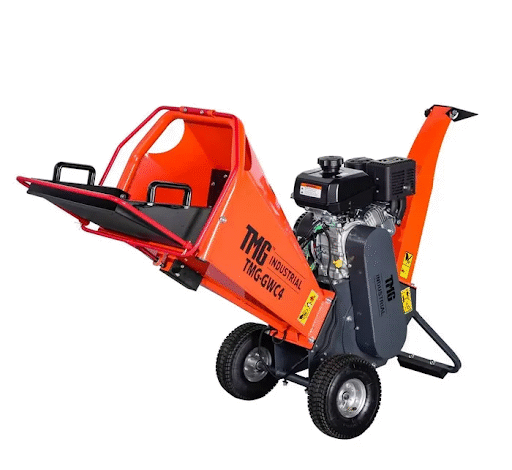
TMG Industrial builds its Heavy Series four inch model around a Kohler Command engine, and when weighing a 4 inch wood chipper for sale for home use, a reliable engine and easy knife access usually matter more than a larger opening.