

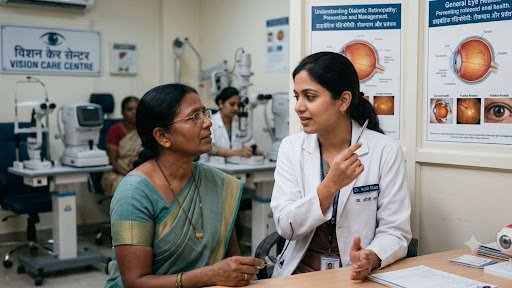
A detailed eye check-up is more useful when the doctor understands your symptoms, health history and daily visual needs. Share what has changed, when you first noticed it and whether the problem affects reading, driving, screen use or other routine tasks.
Previous eye records, medicines and relevant medical conditions also matter. Giving clear, accurate information helps the doctor examine your eyes with the right context and address your concerns properly.
1. Share Any Changes in Your Vision
Tell the eye specialist about blurred vision, headaches, eye strain, redness, watering, dryness, flashes, floaters, double vision or difficulty seeing at night.
Explain when the problem started, how often it occurs and whether it affects one or both eyes. Also mention anything that seems to improve or worsen it noticeably.
2. Share Your Current Prescription and Eye Reports
Bring your current glasses or contact lens prescription along with older eye reports, if available. Tell the eye specialist about recent changes in your power or any condition being monitored.
Previous records can help the eye doctor understand how your vision has changed and identify areas that may need attention.
3. Share Your Medical Conditions and Medicines
Share conditions such as diabetes, high blood pressure or other long-term illnesses, along with medicines, supplements and eye drops you use regularly.
An ophthalmologist may need this information because general health and certain medicines can affect the eyes. Complete details also support safer and more appropriate eye care decisions.
4. Share Details of Previous Eye Treatment
Bring your current glasses or contact lens prescription along with older eye reports, if available. Mention any recent changes in your power or any condition that is being monitored.
Previous records can help the eye doctor understand how your vision has changed over time and identify areas that may need closer attention during examination.
5. Share Your Family History and Daily Visual Needs
Tell the eye doctor about any known family history of glaucoma, retinal disease or other significant eye conditions. Also explain your daily visual needs, including long screen hours, driving or close work.
These details can help connect your symptoms with routine habits and provide useful context for ongoing eye care.
6. Share Your Questions and Concerns
Share questions you have before the appointment ends. Ask about findings you do not understand, whether follow-up is needed and which symptoms require attention.
If another test or an eye surgeon consultation is suggested, ask why it is needed. Clear questions make the doctor’s advice easier to understand and follow.
Final Thoughts
A detailed eye check-up is not only about the tests performed during the visit. The information you share also matters. Be ready to discuss symptoms, prescriptions, medical conditions, medicines, previous treatment, family history and daily visual demands.
Do not ignore a concern because it seems minor. Clear information helps the doctor understand your situation, plan suitable checks and explain the next steps in a way you can follow confidently.