

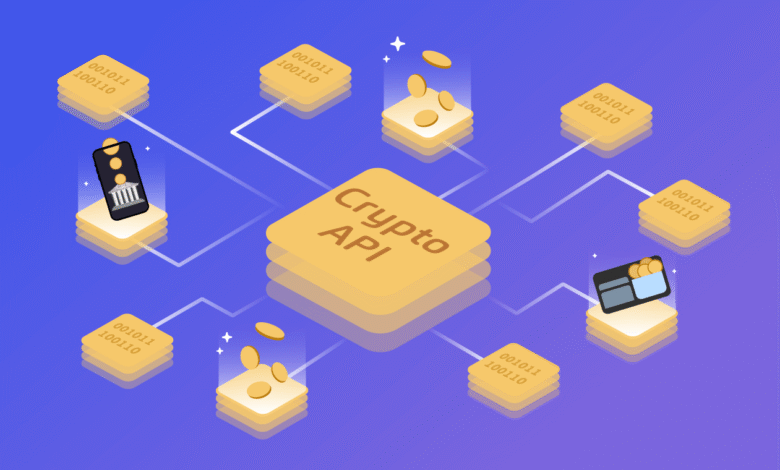
In today’s crypto landscape, data is the real currency. Every trading move, portfolio adjustment, or DeFi insight relies on fast and accurate access to information. For developers and analysts alike, institutional API solutions and reliable data feeds form the backbone of innovation. Cryptocurrency API is an invisible yet powerful bridge between complex blockchain systems and user-friendly applications.
Think of it as a translator between software components. Instead of manually gathering data from countless exchanges and blockchains, APIs allow platforms to “talk” to each other automatically. From pulling price charts to sending trade orders, they make the crypto ecosystem more connected, efficient, and intelligent.
Blockchain APIs and Other API Types Explained
A blockchain API provides direct access to on-chain data — transaction histories, wallet balances, gas fees, or block confirmations. Developers use them to create explorers, payment systems, or NFT platforms. It’s like having a microscope over the blockchain’s raw activity.
Then there are market data APIs, which deliver real-time and historical prices, order books, and volume data for thousands of assets. Traders depend on these feeds to track market trends, monitor volatility, and evaluate liquidity conditions before making moves.
Meanwhile, trading APIs go one step further — they allow automated strategies, bots, and algorithmic systems to execute trades without human input. By connecting directly to exchanges, these APIs handle everything from order placement to risk management, enabling truly hands-free trading.
In the same family are the token metrics API and portfolio tracking API tools that aggregate and visualize token fundamentals, on-chain stats, and personal holdings. They’re essential for anyone managing diversified portfolios or researching emerging assets.
Portfolio Trading APIs and Other Examples of API Integration
APIs aren’t just technical tools — they’re the silent partners behind most crypto operations we take for granted. Here’s how they’re often integrated in practice:
- Portfolio management platforms use APIs to synchronize data from multiple wallets and exchanges, giving traders a complete overview of their holdings.
- DeFi analytics tools combine blockchain and market data APIs to analyze liquidity pools, yield opportunities, and token performance.
- Automated trading systems rely on trading APIs to execute buy and sell orders based on pre-set strategies.
- Wallet applications connect via crypto wallet APIs to display balances and transaction histories in real time.
- Compliance professionals rely on APIs to follow transaction flows, assess potential risks, and strengthen AML efforts through in-depth wallet tracking and fund analysis.
Each integration transforms fragmented data into a unified ecosystem, allowing users to react faster and make more informed decisions.
AI-Powered Trading Signals — Retrieving Insights
As markets become faster and more complex, intelligence matters as much as speed. AI-powered trading signals are advanced APIs that use artificial intelligence to analyze patterns across exchanges, detect anomalies, and generate probabilistic buy/sell insights. Combined with DeFi analytics and on-chain metrics, they help traders anticipate moves instead of just reacting to them. By merging human strategy with machine precision, modern APIs are redefining what it means to trade smart.
Whether you’re a developer building tools or a trader seeking an edge, APIs are the lifeline connecting every layer of the digital asset world. Cryptocurrency API isn’t just a technical feature — it’s the key to staying one step ahead in the evolving, data-driven crypto economy.