

Companies are increasingly adopting cloud infrastructure, and the stability of connectivity to the cloud is becoming a critical part of their architecture. When a business moves its workloads to AWS, it requires predictable speed, minimal latency, and guaranteed bandwidth. However, standard internet connections do not always provide the necessary level of stability. This is where AWS Direct Connect comes into play — a dedicated link between a company’s infrastructure and AWS that delivers faster, more reliable, and more predictable access to cloud services.
The choice of location for the AWS Direct Connect service affects everything: traffic routing, application response time, availability, cost, and resilience. AWS deploys connection points across various regions of the world, and each of them provides direct access to the Amazon cloud network through partner data centers. Selecting the right location helps businesses build an efficient hybrid architecture, reduce latency, and optimize network costs.
What AWS Direct Connect is
AWS Direct Connect is a dedicated network connection between a company’s infrastructure and the AWS cloud. Unlike internet-based connectivity, Direct Connect provides a more stable channel with predictable bandwidth, low latency, and a high level of reliability. Data is transmitted directly, bypassing the public internet, which increases security and eliminates the impact of unpredictable internet routing.
How the connection works
Direct Connect operates at the data-link level: a company receives a physical or virtual connection at one of the AWS Direct Connect Locations — points of presence where Amazon and partner equipment is hosted. Through this connection, virtual interfaces (VIFs) are created that provide:
– access to private AWS networks (Private VIF);
– access to public AWS services (Public VIF);
– connectivity to multiple AWS Regions via Direct Connect Gateway.
One of the key advantages of Direct Connect is its fixed routes. While internet routing depends on network load, Direct Connect uses predefined paths. This is especially important for critical applications such as financial platforms, streaming services, real-time analytics, corporate systems, and large-scale data migrations.
Cost efficiency of Direct Connect
Because traffic is transmitted directly, companies can reduce expenses on internet bandwidth and lower the cost of data transfer from AWS. For organizations with high data-exchange intensity, Direct Connect becomes one of the most economical ways to interact with AWS.
In essence, Direct Connect is a way to achieve smoother, safer, and more controllable connectivity with AWS. This makes it a foundational component of hybrid architectures and resilient enterprise networks.
Why AWS Direct Connect locations matter
The location of the connection point directly affects the latency between a company’s infrastructure and AWS. The closer the AWS Direct Connect Location is to your office or data center, the fewer hops the traffic takes and the more stable the connection becomes. For applications that require minimal latency — such as financial systems, streaming, and real-time analytics — this is a critical factor.
AWS places Direct Connect Locations in partner data centers around the world. These locations do not directly overlap with AWS Regions but have high-speed backbone links to them. This distribution allows companies to connect to AWS even in areas where no local AWS Region exists. As a result, businesses gain access to the cloud through an optimized route that does not depend on congested internet channels.
Interaction with hybrid architecture
Companies increasingly rely on hybrid cloud models: part of the systems remains in on-premises data centers, while another part moves to AWS. The choice of a Direct Connect Location determines how efficiently these two segments of the corporate IT infrastructure interact. With an optimal location, internal network load decreases, data replication accelerates, VPN tunnels become more stable, and routing between offices and the cloud becomes simpler.
The right AWS Direct Connect Location affects business architecture as much as the choice of an AWS Region. It determines:
- overall latency;
- resilience to failures;
- routing efficiency;
- network operating costs;
- scalability flexibility.
Therefore, selecting a location requires analyzing network topology, the distribution of offices and data centers, bandwidth requirements, and availability targets.
Map and distribution of AWS Direct Connect Locations
AWS Direct Connect Locations are hosted in partner colocation facilities and connected to the Amazon cloud network through high-speed backbone links. This makes it possible to connect to AWS in cities where no native AWS Regions exist, ensuring low latency and stable access to cloud services.
North America
North America has the most extensive Direct Connect network. Locations are situated in major technology hubs, providing fast and reliable channels for companies with high traffic volumes. These include:
- New York (NYC1/NYC2),
- Los Angeles,
- Chicago.
These cities provide access to the AWS high-speed backbone and allow businesses to select optimal routes for different parts of the country.
Europe
In Europe, Direct Connect Locations cover major digital infrastructure centers, ensuring optimal routes even in the absence of a local AWS Region. Examples include:
- Frankfurt,
- London,
- Amsterdam.
These locations are suitable for companies operating across multiple European markets and provide stable AWS connectivity throughout the region.
Asia-Pacific
The Asia-Pacific region hosts one of the fastest-growing Direct Connect networks, where high traffic density demands minimal latency and strong resilience. Key cities include:
- Tokyo,
- Singapore,
- Sydney.
They offer minimal distance to AWS backbone routes and excellent performance for both regional and global applications.
South America
In South America, Direct Connect Locations improve routing and cloud service performance by providing more direct paths to AWS. Primary cities include:
- São Paulo,
- Rio de Janeiro.
These hubs provide reliable and predictable routes for enterprise customers across the region.
Middle East and Africa
In these regions, Direct Connect is expanding rapidly in response to increasing demand for cloud services. Companies gain more direct paths to the nearest AWS Regions. Typical locations include:
- Dubai,
- Manama (Bahrain),
- Johannesburg.
They ensure low latency and enable seamless integration of local systems with AWS’s global infrastructure.
The global distribution of AWS Direct Connect Locations covers key markets worldwide. Regardless of the region, each location provides predictable, redundant, and high-performance access to AWS, making Direct Connect a foundational element of global hybrid architectures.
How Direct Connect infrastructure is organized at the locations

Connection architecture through partner data centers
AWS Direct Connect is hosted in certified partner colocation facilities where AWS network equipment is installed, providing companies with access to the cloud. The connection is established through a dedicated port supplied by the partner, enabling a direct channel between the corporate network and AWS.
Port types and bandwidth
Direct Connect Locations offer ports with various bandwidth capacities — from 1 Gbps to 100 Gbps, depending on the facility and partner. Companies can choose the required bandwidth based on their data transfer needs, workloads, and budget. The ability to scale bandwidth makes Direct Connect a convenient tool for growing projects and hybrid cloud architectures.
The role of partner providers
Many companies connect to Direct Connect not directly but through network partners. These providers deliver connectivity to the AWS point of presence, enabling access in regions that do not have their own Direct Connect Locations or where direct physical connection is not economically viable. Such partners may also offer redundant circuits, additional routing options, and connection management services.
How data transmission is structured
Once a company connects to a Direct Connect Location, it gains access to the AWS backbone — Amazon’s internal high-speed network. Data is transmitted through predictable routes that are not affected by the state of public internet nodes. Virtual interfaces (VIFs) allow traffic to be segmented into public, private, and global flows, simplifying the management of complex hybrid environments.
Reliability and redundancy
Direct Connect Locations implement a multi-layer redundancy model, which includes:
- network device redundancy;
- duplicated fiber circuits;
- independent routes to AWS Regions;
- the ability to use multiple locations for geo-redundancy.
This ensures high service availability even during peak loads or network incidents.
Direct Connect vs Direct Connect Gateway vs Hosted Connections
Direct Connect: the basic dedicated link
Direct Connect is a dedicated physical connection between a company’s infrastructure and AWS. It provides predictable bandwidth, low latency, and increased stability compared to internet traffic. This approach is suitable for organizations that require guaranteed connection quality and large data transfer volumes. The connection is established through a port at a Direct Connect Location, and routing is managed via BGP.
Direct Connect Gateway: scalable multi-region connectivity
Direct Connect Gateway allows one or several virtual interfaces (VIFs) to connect to different AWS Regions using a single dedicated connection. This is especially useful when:
- the company has a distributed infrastructure;
- multiple VPCs in different regions must be connected;
- a multi-region architecture is used for resilience;
- centralized traffic management is required.
Direct Connect Gateway removes the limitation of connecting only to the Region closest to the Direct Connect Location. It creates a global routing hub that enables connectivity between VPCs across different parts of the world.
Hosted Connections: partner-based connectivity
Hosted Connections are provided by AWS network and colocation partners. This option is intended for companies that do not need their own physical port or for whom purchasing a full dedicated capacity is not practical. A partner allocates a portion of a port (typically from 50 Mbps to 10 Gbps), and the company gains access to Direct Connect without capital investment in a full dedicated link.
Hosted Connections are a good fit when:
- fast onboarding is required without lengthy coordination;
- traffic volumes are moderate;
- a full physical port is unnecessary;
- the company operates in a region without a Direct Connect Location.
How to choose the right option
The choice depends on architecture and workload:
- Direct Connect — for large-scale projects where maximum bandwidth and guaranteed quality are critical;
- Direct Connect Gateway — for companies with global projects or distributed VPCs;
- Hosted Connections — for a cost-efficient and quick start without capital expenses.
Selecting the right connectivity model helps optimize routing, improve application performance, and ensure predictable operation.
How to choose the optimal location
The first and most important factor is the distance between your infrastructure and the nearest AWS Direct Connect Location. The shorter the physical distance, the lower the latency and the more stable the routing. For real-time applications, financial operations, streaming analytics, or services with intensive data synchronization, this is a critical requirement.
When choosing a location, you should consider not only the geography of your offices and data centers but also the actual network paths. In some cases, a more distant point may provide better connectivity through a provider’s backbone routes.
Analyze available bandwidth
Direct Connect Locations offer different port types — from 1 to 100 Gbps. Not all facilities support the full range of speeds, so it is important to determine current and future traffic volumes in advance.
If a project is actively growing or involves high-intensity data transfer (such as AWS backups, continuous ETL processes, or large databases), it is better to choose a location that supports bandwidth scalability.
Evaluate the economics of connectivity
The cost of using Direct Connect includes charges for the port, traffic, and partner services. To choose the optimal location, it is essential to consider:
- the cost of reaching the point of presence;
- pricing for ports of different capacities;
- data transfer costs within the region;
- the need for redundancy or duplicate links.
Sometimes a more expensive location may be more cost-effective due to better routing or reduced inter-region traffic expenses.
Check resilience requirements
For mission-critical systems, it is recommended to use two Direct Connect Locations, preferably in different buildings and with independent backbone routes. When choosing a location, it is important to clarify:
- whether the region has a second site for geo-redundancy;
- how independent the backbone routes between the two points are;
- whether the partner supports an SLA that aligns with business requirements.
Companies with high traffic loads or distributed architectures should choose locations that enable resilient designs without overly complicating the network topology.
Consider compliance and local regulations
Some companies must select a Direct Connect Location within a specific country or economic zone due to data-handling regulations. In such cases, it is essential to ensure that the chosen point of presence complies with the required rules for data storage, routing, and access.
The final choice should be validated through load testing and route analysis. Even with similar specifications, locations may exhibit different latency or stability characteristics.
The importance of choosing the right Direct Connect location
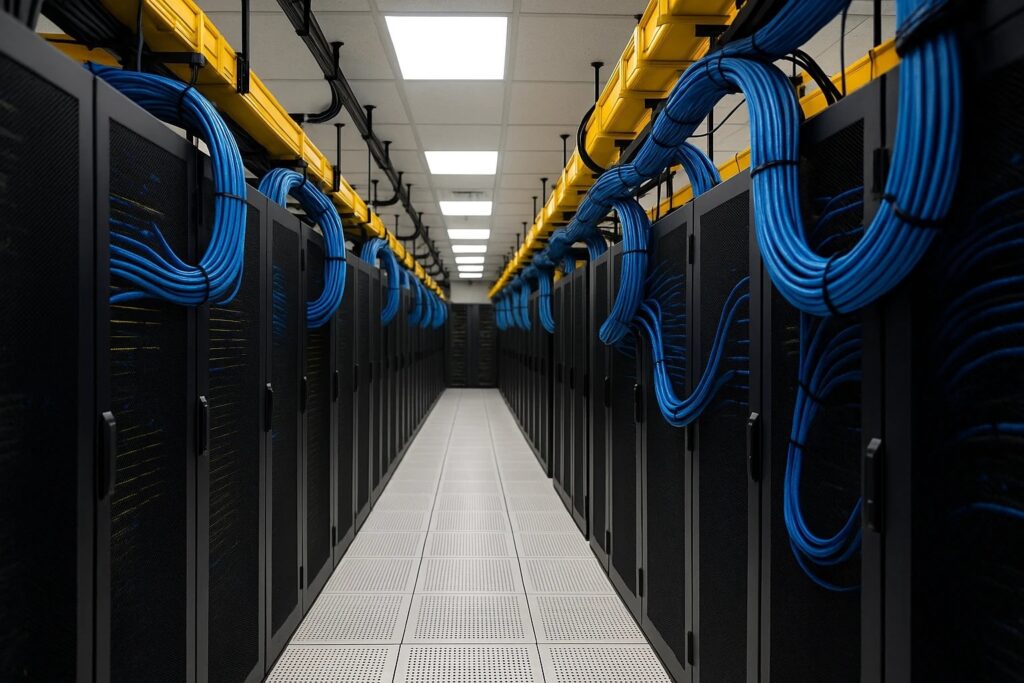
A properly configured AWS Direct Connect connection becomes a key component of modern network architecture. It provides predictable performance, low latency, and stability that cannot be guaranteed when using standard internet channels.
However, the effectiveness of Direct Connect depends directly on the chosen location. It determines how fast applications will operate, how routes will be distributed, how much network operations will cost, and how resilient the hybrid infrastructure will be.
The global network of Direct Connect Locations enables companies to choose the optimal connection points based on geography, performance requirements, and availability needs. Regardless of business scale — whether a local organization or a global enterprise — selecting the right location helps improve interaction with AWS, ensure reliable network processes, and reduce infrastructure costs