

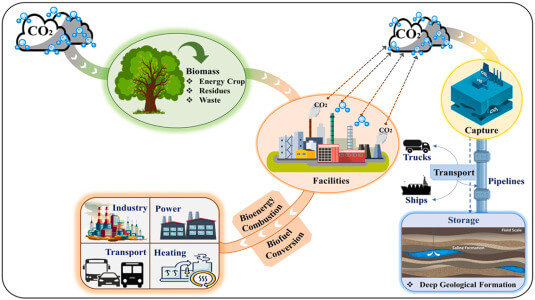
Achieving net zero emissions by 2050 requires a combination of strategies. Carbon capture, utilization and storage (CCUS) is emerging as an essential tool in this effort, helping to reduce emissions from sectors where other solutions aren’t feasible.
The Challenge of Hard to Abate Emissions
While renewable energy, electrification, and energy efficiency form the backbone of net zero strategies, some emissions are difficult to eliminate. Industries such as cement, steel, and chemicals produce CO2 as a direct result of chemical processes rather than energy use. Similarly, transitional fossil fuel power plants will continue to operate during the shift to a fully renewable grid. Carbon capture allows these sectors to significantly reduce emissions while alternative solutions are scaled up.
Carbon Capture in Power Generation
Power generation is a key area for carbon capture. Gas and coal plants still play a role in grid stability, and capturing emissions from these sources is crucial. Engineers are particularly focused on reducing gas turbine co2 emissions, as turbines are widely used in electricity and industrial power generation. Capturing CO2 at the source allows plants to operate with a lower carbon footprint even before fully zero carbon alternatives are implemented.
Policy Support and Investment
Governments worldwide recognize the importance of carbon capture in net zero roadmaps. Policy measures such as tax credits, investment in transport and storage infrastructure, and regulatory frameworks are helping scale the technology. For instance, the US Section 45Q tax credit offers financial incentives for each ton of CO2 permanently stored or utilized, making carbon capture increasingly viable for commercial projects.
Categories of Carbon Capture Application
Net zero strategies typically include four categories of carbon capture:
- Power generation capture: capturing emissions directly from electricity plants.
- Industrial capture: targeting heavy industries with hard to abate emissions.
- Direct air capture (DAC): removing CO2 directly from the atmosphere.
- Bioenergy with carbon capture and storage (BECCS): using biomass for energy while capturing CO2, achieving net negative emissions.
Integrating these categories allows nations and companies to tailor solutions to their unique emissions profiles. For example, industrial-heavy countries may prioritize on-site capture projects alongside renewable energy deployment.
Carbon Utilization and Economic Benefits
Captured CO2 can be converted into chemicals, synthetic fuels, or building materials, improving project economics and reducing reliance on storage alone. While utilization cannot absorb all captured CO2, it strengthens the case for investment in carbon capture projects and creates opportunities for circular carbon economies.
Ensuring Safety and Public Trust
Public acceptance is critical. Communities near geological storage sites must be confident in the safety and monitoring of carbon storage projects. Transparent reporting, independent oversight, and responsible project management ensure that carbon capture delivers genuine climate benefits without unintended environmental impacts.
The Path to Cost Reduction
Early carbon capture projects often have higher costs, but repeated deployment and technological innovation are driving down expenses. Advances in solvents, membranes, and process integration are making carbon capture more cost effective, enabling wider application across hard-to-decarbonize sectors.
Summing Everything Up
Carbon capture is a vital component of net zero roadmaps. By addressing emissions that are difficult or costly to eliminate through other methods, it complements renewable energy, electrification, and energy efficiency strategies. For governments and companies alike, CCUS offers a practical pathway to achieve ambitious climate targets while maintaining economic activity. Without it, many net zero plans would struggle to realistically address residual emissions from industry and power generation.