
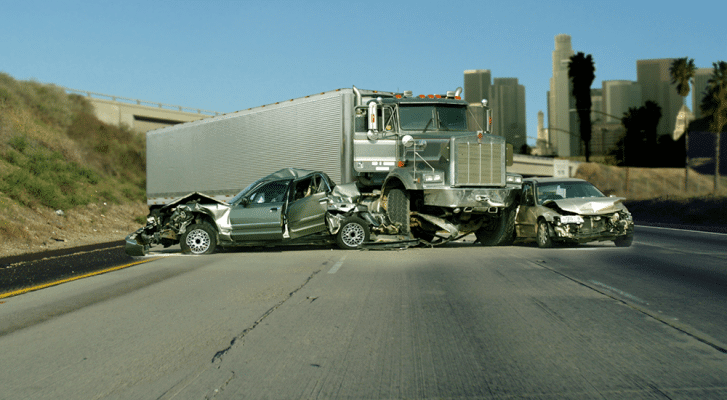
At first glance, a truck accident may look similar to any other vehicle collision. There is damage at the scene, police involvement, medical care, and insurance questions that follow. But in Philadelphia, truck accident cases are fundamentally different from standard car accidents in ways many people do not realize at first.
Commercial trucks operate under separate rules, carry significantly more weight, and often cause more serious injuries. Because of this, truck accident cases involve higher stakes, more investigation, and a longer path to resolution. Understanding these differences can help injured people know what to expect and why these cases require a different approach from the very beginning.
The Size and Weight of Trucks Change the Outcome
One of the most obvious differences between truck accidents and car accidents is size. Commercial trucks can weigh tens of thousands of pounds, especially when fully loaded. Passenger vehicles simply do not offer the same level of protection when struck by a truck.
In Philadelphia, where commercial trucks share narrow city streets with cars, cyclists, and pedestrians, this size difference becomes even more dangerous. Trucks need more time and distance to stop, have wider turns, and larger blind spots. When something goes wrong, the impact is often severe.
As a result, truck accidents commonly cause serious injuries such as traumatic brain injuries, spinal damage, broken bones, internal injuries, and long-term mobility issues. Recovery is often more complex and time-consuming than in typical car accident cases.
Truck Accident Cases Often Involve More Than One Responsible Party
In many car accidents, responsibility is usually limited to one or two drivers. Truck accident cases are rarely that simple.
In addition to the truck driver, other parties may be involved. These can include the trucking company, the owner of the truck, maintenance contractors, or companies responsible for loading cargo. Each of these parties has its own legal duties related to safety and operation.
For example, a trucking company may be responsible for improper training, unrealistic delivery schedules, or failure to maintain vehicles. A maintenance provider may have overlooked mechanical issues. A cargo company may have improperly loaded the truck, making it unstable.
Identifying all responsible parties takes time and careful investigation, which is a major difference from most car accident cases.
Trucking Is Regulated at Both the Federal and state levels
Another key difference is regulation. Commercial trucking is governed by detailed federal and state rules that do not apply to everyday drivers.
These regulations cover areas such as driver qualifications, maximum driving hours, rest requirements, vehicle inspections, and maintenance schedules. Truck drivers are required to keep logs of their driving time, and companies must maintain records showing compliance with safety standards.
When a truck accident occurs, investigators often review these records to see whether rules were followed or ignored. Violations of trucking regulations can play an important role in understanding how and why an accident happened. This regulatory layer adds complexity that does not exist in most car accident cases.
Evidence in Truck Accident Cases Is More Technical
Truck accident investigations rely on a wider range of evidence than car accidents. In addition to police reports, photos, and witness statements, commercial trucks often contain electronic data that records speed, braking, engine activity, and driving behavior.
Driver logs, maintenance records, inspection reports, and cargo documentation may also be reviewed. Some trucks are equipped with cameras or tracking systems that provide additional information.
This evidence can be lost or overwritten if it is not preserved quickly. That is why truck accident cases often involve early and detailed investigation. Compared to car accidents, where evidence is usually limited to the scene itself, truck cases require a deeper technical review.
Insurance Coverage Works Very Differently
Insurance is another area where truck accidents differ from car accidents. Passenger vehicles are usually covered by personal auto insurance policies. Commercial trucks, on the other hand, are insured under business or commercial policies.
These policies often have higher coverage limits, but they may also involve multiple insurance companies. A single truck accident may trigger coverage questions involving the driver’s insurer, the trucking company’s insurer, and other third parties.
While higher policy limits can be important in serious injury cases, they also make claims more complex. Insurance companies may take longer to respond, investigate more aggressively, and dispute responsibility. This can be frustrating for injured people who are trying to focus on recovery.
Timing Is More Critical in Truck Accident Claims
Timing matters in every accident case, but it matters even more in truck accidents. Evidence needs to be preserved, medical conditions documented, and records reviewed before they change or disappear.
Delays can limit access to important information, such as electronic data or maintenance records. Medical delays can also make it harder to connect injuries to the accident later on.
Because truck accidents often result in serious injuries and long recovery periods, early decisions can have lasting effects. Understanding the importance of timing helps injured people avoid common setbacks.
When Legal Questions Begin to Surface
As the days and weeks pass after a truck accident, practical questions naturally arise. How long will medical treatment last? Who is responsible when multiple parties are involved? How does commercial insurance affect the claim?
This is often when people consider speaking with an experienced Philadelphia truck accident attorney at The Oakes Firm to better understand their options. The goal is not to rush into action, but to gain clarity in a situation that is more complex than a typical car accident.
Having a clear understanding of how truck accident cases work allows injured people to make informed decisions instead of reacting under pressure.
The Long-Term Impact of Truck Accidents
Truck accidents often affect more than just physical health. Extended recovery periods can lead to missed work, financial stress, and changes in daily routines. Simple tasks like driving, lifting, or commuting may become difficult for months or longer.
The emotional impact should not be overlooked either. Serious accidents can cause anxiety, frustration, and uncertainty about the future. Recognizing that these challenges are common helps people approach recovery with patience and realistic expectations.
Understanding the Difference Makes a Real Impact
Truck accident cases are not simply larger versions of car accident cases. They involve different risks, different rules, and different challenges from the very beginning. An experienced Philadelphia truck accident attorney at The Oakes Firm brings the right guidance and clarity to the case.
In a city like Philadelphia, where commercial traffic is part of daily life, understanding these differences helps injured people navigate the aftermath more confidently. By focusing on medical care, preserving information, and staying informed, individuals can move forward with greater clarity during a difficult time.