
You’ve probably sat through lectures that felt like watching paint dry while frantically scribbling notes, only to get home and realize you still don’t understand the material. That traditional setup—teacher talks, you listen, homework later—has been the default for generations, but it’s not the only way. Enter the flipped classroom, an approach that turns the script upside down and, for many students and teachers, actually works better. Here’s what it looks like in real life and why you might want to give it a shot.
What “Flipped” Actually Means
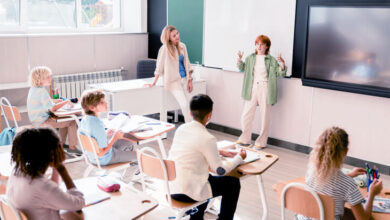
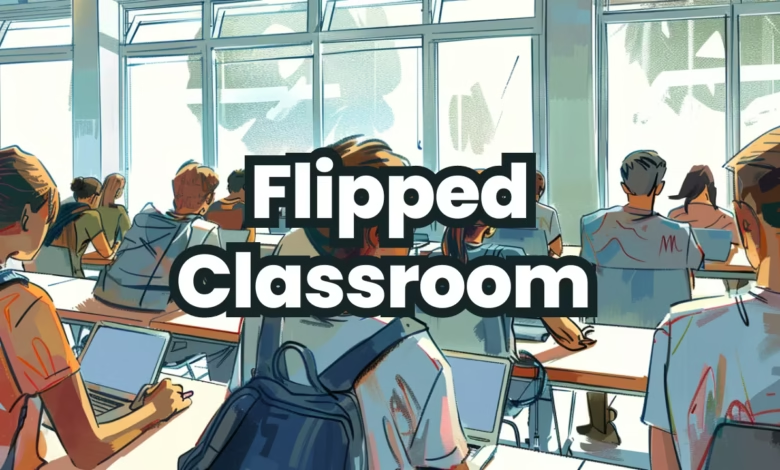
Using the flipped classroom approach, you do the “learning” part at home and the “practice” part in class. Before the bell rings, you watch a short video lecture, read a text, or work through an interactive lesson—whatever your teacher assigns. You pause, rewind, speed up, or re-watch as much as you need. Then, when you walk into class, the teacher doesn’t stand at the whiteboard droning on. Instead, you jump straight into activities: solving problems, debating ideas, building projects, or asking the questions that popped up while you were studying on your own. The classroom becomes a workshop, and the teacher becomes a coach who circulates, answers questions, and pushes you further.
Why It Feels So Different (in a Good Way)
You control the pace at home. If derivatives make your brain hurt, you can watch that explanation four times at 2 a.m. in your pajamas—no judgment. No one’s moving on until you’re ready. Then, when you’re in class surrounded by peers and a teacher who can help instantly, you actually use the knowledge instead of just copying it into a notebook. Mistakes happen in front of someone who can fix them right away, not at 10 p.m. when you’re stuck and Googling answers that might be wrong.
The Research Isn’t Just Hype
Studies keep showing that students in flipped classrooms often outperform their peers in traditional ones, especially in math and science. Retention improves when you actively do something with the information rather than passively receive it. You also develop better time-management habits and learn how to learn—skills that matter way more than memorizing the quadratic formula for Friday’s test.
It’s Not All Rainbows—There Are Real Challenges
You need decent internet and a device, which isn’t fair or possible for everyone. Some students procrastinate and show up unprepared, which wastes everyone’s time. Teachers also have to work harder upfront: recording clear videos, designing meaningful activities, and rethinking every lesson isn’t easy. However, schools that commit to training and resources usually find the payoff is worth the growing pains.
How You Can Make It Work for You
Whether you’re a student or a teacher reading this, start small. Students: treat the at-home material seriously—take notes, write questions, message a classmate if you’re confused. Teachers: keep videos under 10–12 minutes, give students a quick quiz or reflection before class to see who’s ready, and protect class time for the messy, collaborative stuff that’s hard to do alone.
You don’t have to blow up the entire school system to rethink how learning happens. The flipped classroom simply asks a radical question: what if the most complex, most interactive parts happened when you have help nearby, and the straightforward explaining occurred when you can control the remote? When you try it with intention, most people discover they learn more, stress less, and actually enjoy class for once. The traditional model served its time, but you now have the tools and evidence to do better. Flipping the classroom isn’t about gadgets or trends—it’s about putting you, the learner, in the driver’s seat. Honestly, you’ve earned that.