How Is The Scrum Master Role Changing Because of AI and What New Responsibilities Matter Most?

The use of AI is growing fast, and it’s already doing things like summarizing stand-ups, drafting user stories, and identifying where work has stalled. As a result of this growth in AI usage, there are now many people who are wondering what skills a Scrum Master will always need to have because they are based on trust, judgment, and the way humans behave. These skills include facilitating, resolving conflicts, coaching, and developing a sense of psychological safety. In the following paragraphs, I will describe why these skills will last forever, how Boost Career with Certified Scrum Master (CSM) Course professionals can learn them, and how to utilize AI without giving away those parts of the job that are most important.
What AI Already Does Well in Agile Teams
AI handles work that is repetitive and data-heavy. Common examples:
- Summarizing meeting notes and retrospective feedback
- Tracking metrics such as velocity and cycle time
- Drafting backlog items and acceptance criteria
- Spotting patterns, like blockers that recur across sprints
Tasks like this will help save time; however, these tasks were not at the center of the position. According to the Scrum Guide, a Scrum Master has accountability for improving team performance and assisting others in understanding how Scrum works. This means that a large portion of what a Scrum Master does involves working with individuals rather than dealing with documentation. If a Scrum Master spends most of his/her day updating boards, then he/she is working on the easiest aspects of the job.
Which Scrum Master Skills Can AI Never Replace?
AI will provide the Scrum Master with data and suggestions; however, AI will never replace the human interaction and decision-making processes that are essential to being a successful Scrum Master. AI will never establish trust with team members; AI will never understand the emotional climate of a meeting; and AI will never take responsibility for the overall health of a team.
Facilitation and Reading the Room
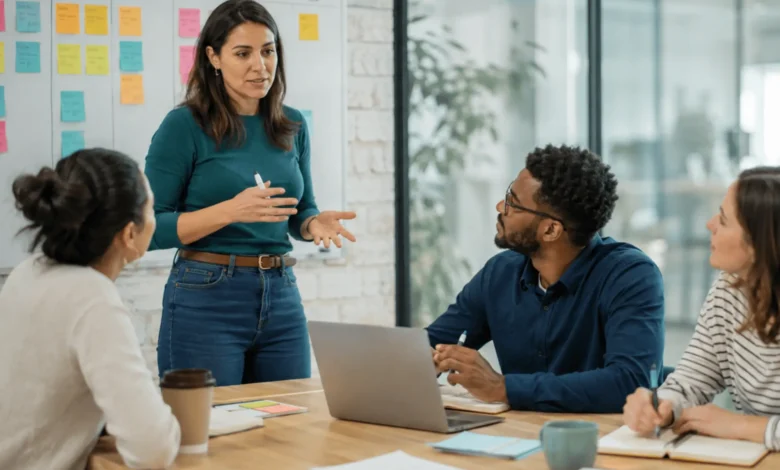
A tool can set up a retrospective and recommend how to run it. However, it cannot tell you that a developer became silent when a manager spoke, and it cannot know that the actual problem being discussed is different from what is listed on the agenda. Facilitators who have experience are able to adapt quickly during meetings, alter the format of the meeting if necessary, and create an environment where developers feel comfortable expressing their thoughts and ideas.
Conflict Resolution
Conflicts regarding priorities, standards of quality, and/or workload are not only technical but also emotional. To resolve these types of issues requires neutrality, proper timing and being credible to both parties involved. While AI can create summaries of each person’s position, it cannot act as a mediator for two individuals who require the feeling of being listened to.
Coaching and Servant Leadership
Scrum Masters are at their best when they use questions to guide individuals to come up with their own solutions, rather than giving orders. When coaching, it is essential to understand each person, including how confident they feel, their previous experience as part of the team, and what drives them.
Building Psychological Safety
Teams will share risks only after they have built a sense of safety. Leaders create this feeling of safety through their daily interactions with employees for several months: being honest about errors made, reacting to negative feedback in a non-threatening manner, and creating an environment where employees feel comfortable sharing their concerns. AI is not capable of creating an environment in which employees can develop a relationship with a leader that allows them to be vulnerable and build a level of trust.
Stakeholder Influence
Oftentimes when we remove roadblocks (impediments), we need to negotiate with managers, other departments, and/or customers. To do this, you will need to understand how the politics of your company work and determine when to push. While an artificial intelligence (AI) may find a roadblock, humans are needed to convince people to fix it.
An illustrative example: For three consecutive sprints, a team’s velocity declines. AI identifies this decline and links it to ticket types. A Scrum Master then speaks with the team about what they are experiencing. The team tells the Scrum Master that a stakeholder is continually changing priorities during the middle of each sprint, which is exhausting the entire team. This issue will be resolved through a conversation with the stakeholder, rather than by creating yet another dashboard.
How Do Top CSM Professionals Master These Skills?
An experienced scrum master treats people skills as a skill they have learned and can practice rather than a part of who they are (i.e., as a personality trait). Typically, the process of developing those people skills follows a certain pattern:
I believe you will learn the basics of Scrum. You will understand how Scrum’s roles, events, and values work so that you can decide what to change and what to keep the same. The structured CSM certification training provided by Simpliaxis will give you a common framework for working together on projects and provide hands-on practice in facilitating real-world scenarios.
Be intentional with your practice of facilitation. Use different types of retrospectives and switch between them. Ask your colleagues about their experience in the room rather than focusing on the result.
Conflict resolution techniques and study coaching can be used to improve communication skills. You should use active listening, powerful questions, and a structured conflict model. Use these in low-stakes environments before using them in higher-stakes ones.
The Peer Group/Seasoned Coach: A source of new experiences. Peer groups and seasoned coaches provide exposure to new experiences.
At the end of each sprint, take some time to reflect on your experiences during that period. You should note down your accomplishments, the reaction of your team to those accomplishments, and any improvements or changes you would like to make going forward.
The use of AI should be limited to preparing for events and/or tasks. It should be used to create drafts of agendas or to summarize comments, but you will still need to assess the personalities of the individuals who are participating.
Human Skills vs. AI Support
| Scrum Master Task | What AI Can Do | What Humans Must Do |
| Retrospectives | Summarize themes. | Facilitate honest discussion. |
| Team conflict | Surface tension patterns | Mediate and rebuild trust. |
| Coaching | Suggest resources. | Support individual growth. |
| Impediments | Detect and flag | Negotiate and resolve |
| Reporting | Generate dashboards. | Interpret in context. |
Mistakes to Commonly Avoid
- Treating AI output as the answer instead of one input.
- Automating conversations that build trust, such as one-on-ones.
- Focusing on ceremonies and tools rather than team behavior.
- Assuming certification by itself will build skill. However, certification provides the foundation for building skill through practice.
Conclusion
The Scrum Master’s role is to facilitate the use of Agile practices within their organization. They have a responsibility to assist teams in adopting these practices and also to help ensure that everyone understands how to use them effectively. AI can be an extremely useful tool for the Scrum Master; however, it should never replace the work being done by the team itself. For example, AI can be used to summarize daily stand-ups; however, it cannot establish psychological safety among team members, nor can it provide the type of facilitation required during a challenging retrospective session. In addition, AI can be utilized to automate reporting functions, but it cannot resolve conflicts between team members, nor can it coach a team through periods of uncertainty. Ultimately, the value of a CSM lies in their ability to perform all of the above-mentioned activities in a practical, real-world team environment.
The CSM provides me with the opportunity to develop the same skills that are required for effective facilitation, listening, resolving conflicts, coaching, communicating effectively with stakeholders, and providing servant leadership. When working with larger Agile organizations, the SAFe Scrum Master course is an additional beneficial tool, as it focuses on facilitating Agile teams in a scaled environment, enhancing collaboration among different teams, and enabling program-level execution. The combination of CSM and SAFe Scrum Master courses enables me to manage individual Scrum teams and also multiple team delivery environments.
As more routine administrative tasks are automated by AI, I will need to focus on developing judgment, empathy, and my ability to lead people (not just processes). In the future, Scrum Masters will have to deliberately use AI but also double down on those things that cannot be replicated by computers—trust, influence, collaboration, and continuous improvement. For CSMs and SAFe Scrum Masters, this will mean using AI as a tool to expand our impact—so we can spend less time gathering data and more time guiding teams toward delivering value with confidence.