
Is Strep Throat Contagious? Powerful Facts About How It Spreads, How Long It Lasts, and How to Stay Safe

Is strep throat contagious? Yes. Strep throat is a contagious bacterial infection caused by group A Streptococcus (group A strep), and it can spread easily from one person to another, particularly among people who live together or spend a lot of time in close contact. Understanding how the infection spreads and when someone is most contagious can help protect your family, classmates, coworkers, and other people around you.
Strep throat is not simply another type of ordinary sore throat. Viruses cause most sore throats, while group A strep bacteria are responsible for a smaller portion of cases. According to the CDC, approximately 1 in 10 adults and 3 in 10 children with a sore throat have strep throat. The infection is especially common among children between 5 and 15 years old.
What Is Strep Throat?
Strep throat is an infection affecting the throat and tonsils. It is caused by Streptococcus pyogenes, commonly called group A Streptococcus. Unlike many viral throat infections, strep throat is a bacterial infection that can usually be confirmed with a rapid test or throat culture.
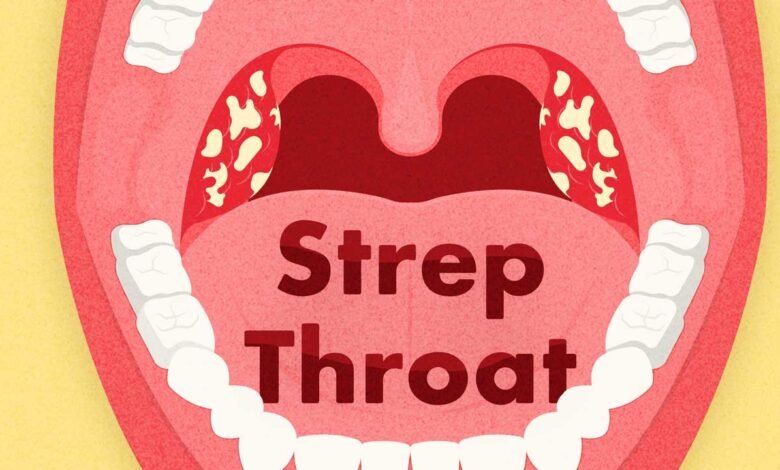
The illness often begins fairly suddenly. A person may develop a painful sore throat, fever, pain when swallowing, swollen lymph nodes at the front of the neck, red or swollen tonsils, and sometimes white patches or streaks on the tonsils. Children may also experience headache, nausea, vomiting, stomach pain, or a rash associated with scarlet fever. Symptoms generally appear about 2 to 5 days after exposure to the bacteria.
What Causes Strep Throat?
The cause is group A strep bacteria. These bacteria commonly live in the nose and throat and can move from an infected person to another person through respiratory droplets or direct contact with infected secretions.
This is why close contact matters. Living in the same household, spending time in crowded environments, or being around school-age children can increase the opportunity for transmission. Schools, daycares, and other crowded settings can provide conditions where respiratory infections spread more easily.
How Contagious Is Strep Throat?
Strep throat is contagious, and group A strep bacteria can spread between people through close contact. Someone who is infected can release bacteria when talking, coughing, or sneezing. Another person may become infected by breathing in respiratory droplets or touching contaminated secretions and then touching their mouth or nose.
Sharing drinking glasses, utensils, or food can also create opportunities for transmission. The good news is that ordinary hygiene practices can significantly reduce unnecessary exposure. Washing hands regularly, avoiding shared eating utensils, and covering coughs and sneezes are simple habits that can make a meaningful difference.
How Strep Throat Spreads
Respiratory Droplets and Direct Contact
The most common routes involve respiratory droplets and direct contact. Imagine an infected person’s cough or sneeze as a tiny cloud carrying bacteria. If someone nearby inhales those droplets, the bacteria may reach the nose or throat and eventually cause infection.
Direct contact with saliva or respiratory secretions can also spread group A strep. For this reason, people with suspected or confirmed strep throat should avoid sharing cups, plates, utensils, and bites of food with others. Although contaminated surfaces may play a role, the CDC indicates that environmental transmission appears to be a less common route than direct person-to-person transmission.
How Long Is Strep Throat Contagious?
The contagious period can vary, but untreated strep throat can continue to spread to other people. This is one reason getting an accurate diagnosis and following prescribed treatment matters.
After appropriate antibiotic treatment begins, the ability to transmit group A strep decreases substantially. CDC clinical guidance states that appropriate antibiotic treatment for 12 hours or longer limits a person’s ability to transmit the bacteria, and people should generally stay home until they are fever-free and have received antibiotics for at least 12 to 24 hours.
Before Antibiotic Treatment
Before treatment, a person with confirmed strep throat can spread the bacteria to close contacts. This is particularly important in households because family members may share bedrooms, bathrooms, meals, and other spaces.
If someone has symptoms that could indicate strep throat, avoiding close contact while seeking medical advice can help reduce the chance of transmission. It is especially important to protect people who may be more vulnerable to complications.
After Starting Antibiotics
Antibiotics can shorten symptoms and reduce transmission. However, taking antibiotics does not mean a person instantly stops being contagious. CDC guidance recommends staying away from school, daycare, or work until the person is fever-free and has taken appropriate antibiotics for at least 12 to 24 hours.
Always take antibiotics exactly as prescribed by a healthcare professional rather than stopping treatment simply because symptoms improve.
What Are the Symptoms of Strep Throat?
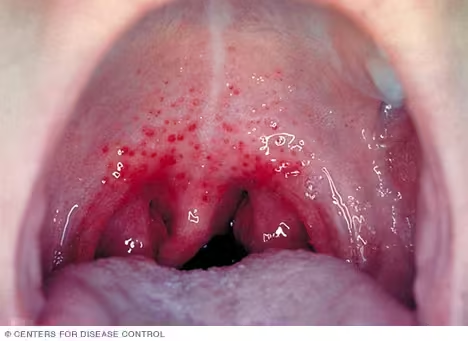
Typical symptoms include a sudden sore throat, fever, painful swallowing, swollen lymph nodes in the front of the neck, and red or swollen tonsils. White patches or streaks of pus can sometimes appear on the tonsils, and small red spots may be visible on the roof of the mouth.
Children can have additional symptoms such as headache, nausea, vomiting, or stomach pain. A rash may occur when the infection is associated with scarlet fever.
Strep Throat vs. a Viral Sore Throat
One of the biggest challenges is telling bacterial strep throat from a viral sore throat based only on symptoms. Viruses are the most common cause of sore throats, and symptoms such as cough, runny nose, hoarseness, conjunctivitis, or oral ulcers are more suggestive of a viral infection than classic strep throat.
When obvious viral symptoms are absent, symptoms alone may not reliably distinguish strep from another cause. Testing can therefore be important before antibiotics are prescribed.
How Is Strep Throat Diagnosed?
Healthcare professionals commonly use a rapid strep test or a throat culture to determine whether group A strep bacteria are causing the infection. A rapid test can provide results quickly, while a throat culture can identify infections that a rapid test may miss.
For children and teenagers, CDC guidance recommends following a negative rapid test with a throat culture in appropriate circumstances. Adults generally do not routinely need a culture after a negative rapid test.
Rapid Strep Test and Throat Culture
A healthcare professional usually collects a sample by gently swabbing the back of the throat and tonsils. The sample is then tested for group A strep.
If the test confirms strep throat, antibiotics are generally recommended. Antibiotics can reduce symptoms, shorten the illness, lower the likelihood of transmission, and help prevent serious complications such as rheumatic fever.
How Can You Prevent Strep Throat From Spreading?
Prevention starts with practical everyday habits. Wash your hands frequently with soap and water, cover coughs and sneezes, and avoid sharing cups, utensils, or food with someone who is sick. These actions are simple, but they create a protective barrier between infected respiratory secretions and other people.
If someone in your household has confirmed strep throat, clean shared dishes and utensils after use and encourage the sick person to follow their treatment plan. Close contacts generally do not need preventive antibiotics simply because they live with someone who has group A strep, unless a healthcare professional recommends otherwise.
Hygiene and Everyday Precautions
Good hygiene is one of the easiest ways to reduce transmission. Avoid close face-to-face contact with someone who is actively sick, wash your hands after coughing or sneezing, and avoid touching your mouth and nose with unwashed hands.
If you develop a sudden sore throat, fever, painful swallowing, or other concerning symptoms after close contact with someone who has strep throat, speak with a healthcare professional. Testing is the best way to determine whether group A strep is actually responsible.
When Should You See a Doctor?
Consider medical evaluation if you or your child develops a significant sore throat, especially when it begins suddenly and is accompanied by fever, painful swallowing, swollen neck lymph nodes, or tonsil changes. Testing can help determine whether antibiotics are appropriate.
Seek prompt medical attention if symptoms are severe, worsening, or accompanied by difficulty breathing, difficulty swallowing fluids, significant dehydration, or other concerning signs. A confirmed bacterial infection deserves appropriate treatment because untreated group A strep can occasionally lead to complications.
Conclusion
Is strep throat contagious? Absolutely. Group A strep bacteria can spread through respiratory droplets and direct contact, making close household and community contact an important risk factor. The infection is especially common among school-age children, but adults can develop it too.
The smartest approach is simple: recognize the symptoms, get tested when appropriate, follow prescribed treatment, and practice good hygiene. After appropriate antibiotic treatment has started, contagiousness drops significantly, but people should still follow healthcare guidance about returning to school, work, or daycare.
FAQs About Strep Throat
1. Is strep throat contagious before symptoms appear?
Transmission can occur around the time of infection, and people with group A strep can spread bacteria through respiratory droplets and direct contact. Because symptoms generally develop 2 to 5 days after exposure, someone may not immediately realize they have been infected.
2. How long after antibiotics is strep throat contagious?
Appropriate antibiotic treatment for at least 12 hours substantially reduces the ability to transmit group A strep. CDC guidance recommends that people return to school, daycare, or work only after they are fever-free and have taken antibiotics for at least 12 to 24 hours.
3. Can you get strep throat from sharing a drink?
Yes. Sharing cups, utensils, or food can expose another person to infected secretions. Avoiding shared eating and drinking items is therefore an important precaution when someone has strep throat.
4. Does everyone with a sore throat have strep throat?
No. Most sore throats are caused by viruses. CDC estimates that strep accounts for about 5% to 15% of pharyngitis infections in adults and 20% to 30% in children.
5. Can strep throat go away without antibiotics?
Symptoms may eventually improve, but confirmed group A strep throat should be evaluated and treated according to healthcare guidance. Appropriate antibiotics shorten symptoms, reduce transmission, and help prevent complications such as rheumatic fever.