
It often begins with one post that appears out of nowhere.
A short video shows people running through a city street. A screenshot claims to contain an official statement. Someone describing themselves as a witness explains what supposedly happened.
Within minutes, larger accounts begin sharing it. Some add a location. Others suggest a cause. By the time the post reaches your feed, the comments may already be treating the story as confirmed.
The trouble is that the first post you see is often the middle of the story, not the beginning.
The person sharing the video may have copied it from another platform. A screenshot may hide the username and date. The location in the caption may come from someone’s guess rather than the person who recorded the scene.
Social media is very good at showing us what people are talking about. On its own, it is much less reliable at proving what actually happened.
Work backward before you scroll forward
When an important post appears, the natural response is to open the comments and look for answers. It is often more useful to work backward instead.
Search for a distinctive sentence from the post, along with any usernames, locations, event terms, or hashtags. If the image contains a road sign, building, business name, or public agency, include that detail in the search.
Then follow the reposting trail. Does the account say where the material came from? Is there a quoted post below it? Has someone in the replies linked to an earlier version?
Public social media viewers such as Sotwe can help people search open posts, profiles, and trends without first signing into a personal X account. That can be useful when tracing how a story spread. However, results from a third-party viewer may be delayed or incomplete, especially when the original platform changes how public content can be accessed.
Even finding an earlier post does not prove that you have found the original creator. The material may have first appeared in a private group, another app, or a direct message.
If you can only find the earliest public version, call it that. There is no need to promote it to “the original source” when the evidence does not support the label.
Treat unfamiliar links as leads, not proof
Breaking posts often include external links. They may lead to an article, a fundraising page, a shared document, or a supposed livestream.
The link can make the post look better supported, but it is still only another lead to examine.
Look at the real domain rather than the words on the button. A fake site may copy the appearance of a known news outlet while using a slightly different spelling or domain ending. Shortened links deserve extra care because they hide the destination.
Before opening an unfamiliar address, readers can check whether a link is safe. A link checker may identify pages connected with known phishing, scam, or malware sources. A clean result does not prove the page is trustworthy, so the next questions still matter: Who runs it? When was it published? What sources does it provide? What is it asking you to do?
Be especially cautious when a page demands a social media password, payment details, a software download, or an urgent donation. The event described in the post may be real while the page taking advantage of it is not.
Protecting your connection is separate from checking the story
People following a fast-moving story often switch between a phone and a laptop. They may also be working from a hotel, café, airport, or event venue rather than a familiar network.
Someone using both devices on public Wi-Fi may choose a free VPN for multiple devices to encrypt each device’s connection to the X‑VPN, for example, combines multi-device VPN access with a browser-based link checker.
These tools cover connection privacy and basic URL screening. They do not decide whether a post is true.
A VPN cannot tell whether a screenshot was altered, identify where a video was recorded, or confirm that an account belongs to a genuine witness. Those questions still depend on sources, dates, and context.
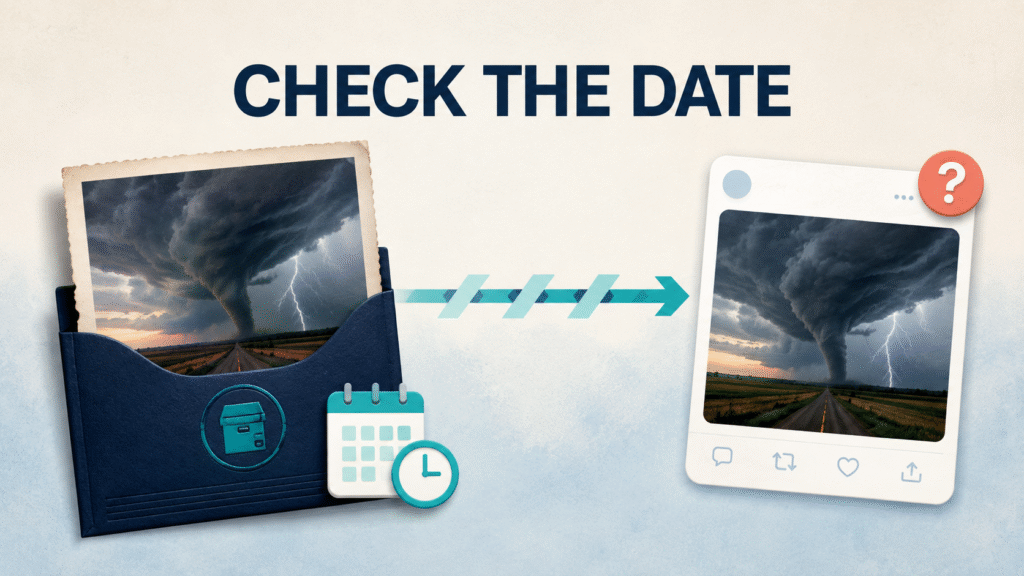
Check the date, then recover the missing context
Old material is one of the easiest ways to create a misleading breaking post.
The photo or video may be completely real but have nothing to do with today’s event. Footage of a flood from several years ago can reappear during a storm in another country. A past protest can be presented as something happening this morning.
Begin with the earliest upload date you can find. Then look inside the material. Does the weather match the claim? Are there road signs, landmarks, uniforms, vehicles, or business names that support the stated location?
Small details may not provide a final answer, but they often reveal obvious conflicts.
It also helps to separate the material from the caption placed around it. A video may genuinely show a crowd running. It may not explain why they are running. A photo may show smoke without proving what caused it.
Remove the caption in your mind and ask: What can I confirm from the image alone?
The answer is often narrower than the post suggests.
Screenshots remove another layer of context. They may crop out the username, time, previous post, replies, or later correction. A reply can even be presented as if it were an original statement.
If a screenshot contains a distinctive sentence, search for that wording and try to return to the live post. Once you find the account, check whether it belongs to the person or organization being discussed, a fan page, an impersonator, or a satire account.
A verification badge or large following can provide background, but neither guarantees that a particular post is accurate. Real people and major accounts can also repeat information they have not checked.
Twenty accounts repeating the same sentence are not twenty independent sources if they all copied one unconfirmed post. What matters is whether any of them provides new information that can be checked separately.
A trending topic is a starting point, not a conclusion
When a hashtag enters the trending list, it means attention around the subject is growing quickly. It does not necessarily represent what most people believe, and it certainly does not confirm the main claims being shared.
A relatively small group of active accounts can push a topic forward. Anger, fear, and conflict also travel faster than cautious explanations. Platforms tend to recommend posts that produce an immediate reaction, while uncertainty rarely earns the same reach.
Trends are still useful. They can show journalists, marketers, and researchers which questions people are asking and which explanations are gaining ground.
They simply belong at the beginning of the investigation, not the end.
If the strongest argument for a claim is that “everyone is saying it,” that is usually a reason to keep looking.
Sometimes the best choice is to wait
Social media rewards speed. The first account to share an update may receive thousands of views before more reliable information appears.
False information uses the same advantage.
If the original source cannot be found, the date and location remain uncertain, or every version leads back to one unknown account, waiting is not a failure to keep up. It is an honest response to missing evidence.
If the subject still needs to be discussed, make the uncertainty visible. Phrases such as “not yet confirmed,” “the earliest public version found so far,” or “the location remains unclear” give readers a more accurate picture than a confident guess.
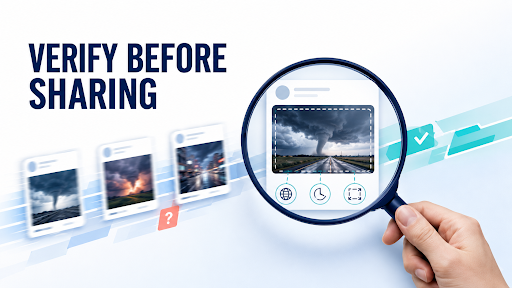
Deleting a false post later may not recover the screenshots, quotations, and reposts already circulating. A few minutes of checking before sharing is usually easier than correcting the story afterward.
No one following a breaking event will have every fact immediately. Responsible browsing does not require becoming a professional investigator.
It requires a few steady habits: work back toward the source, check dates and links, separate what the material shows from what the caption claims, and be willing to wait when the evidence has not caught up.
Social media will keep making stories move faster. Good judgment means we do not have to lose patience at the same speed.