Distance Learning Resources: Powerful Tools, Smart Strategies, and Hidden Challenges for Online Success

The world of education has changed faster in the last few years than many people imagined possible. Traditional classrooms are no longer the only path to learning, and students now have access to thousands of distance learning resources from anywhere in the world. Whether someone wants to earn a degree, improve professional skills, or simply learn a new hobby, online education has become a practical and powerful solution. The flexibility of remote education allows learners to study at their own pace while balancing work, family responsibilities, and personal goals. At the same time, the rapid growth of digital learning has also created confusion because not every platform delivers quality education.
Recent educational reports show that online learners in 2026 are demanding more personalized experiences, affordable programs, and career-focused skills. Experts are noticing a major shift toward microlearning, AI-powered study support, and interactive learning environments. This means students are no longer satisfied with boring recorded lectures and outdated PDFs. They want engaging, flexible, and practical learning systems that actually help them succeed in real life. That is why choosing the right resources matters more than ever before.
Another important factor is accessibility. Distance education has opened doors for students living in remote areas, working professionals, parents, and even retirees who want to continue learning without attending physical classes. Still, online learning is not perfect. Poor internet access, lack of motivation, screen fatigue, and overwhelming course options remain serious problems for many students. The key to success lies in understanding which tools truly improve learning outcomes and which ones simply waste time.
This article explores the best and most effective distance learning resources, the technologies shaping online education, common challenges students face, and practical ways to maximize learning success in the digital age.
Understanding Distance Learning in the Modern Era
Distance education is no longer viewed as a second-choice option for students who cannot attend traditional classes. It has evolved into a mainstream educational model used by schools, universities, companies, and independent learners around the world. The rise of fast internet, cloud-based systems, smartphones, and AI technology has transformed online learning into an interactive experience rather than a simple video lecture. Students today can attend live classes, submit assignments digitally, collaborate in virtual groups, and receive instant feedback from instructors.
One major reason for the growth of online learning is flexibility. People want education that fits around their lives rather than forcing them to adjust everything for school schedules. Working professionals can upgrade their skills after office hours, parents can learn while caring for children, and students in rural areas can access world-class educational content without relocating. According to recent online learning reports, affordability and flexibility remain the top reasons learners choose distance education in 2026.
At the same time, modern learners expect more than convenience. They want courses that produce measurable career results and practical skills. Educational experts are seeing a growing shift toward skills-based learning, microcredentials, and industry-focused certifications. This means online education is becoming closely tied to employability and career growth instead of simply earning certificates.
Still, there is a hidden challenge. Many students assume online learning is easier than traditional education, but that is rarely true. Self-discipline, time management, and active participation are essential for success. Without these qualities, even the best digital learning platform cannot guarantee positive results.
Essential Types of Distance Learning Resources
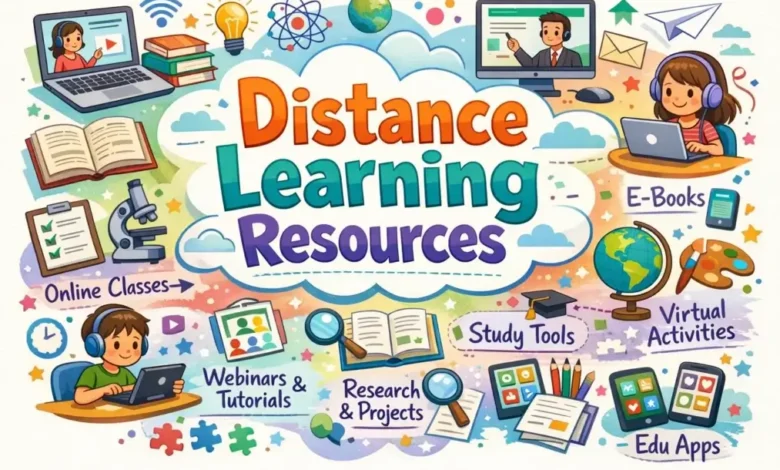
The term distance learning resources covers a wide range of educational tools, platforms, and technologies designed to support online education. Some resources focus on delivering content, while others improve communication, engagement, and assessment. Understanding these categories helps students choose the right combination of tools for effective learning.
Learning Management Systems
Learning Management Systems, commonly known as LMS platforms, act as the backbone of online education. These systems organize courses, assignments, quizzes, attendance records, and communication between students and instructors. Popular LMS platforms provide dashboards where learners can track progress, download materials, and participate in discussions. Universities and schools heavily depend on these systems because they simplify administration while creating structured learning environments.
Modern LMS platforms are becoming smarter in 2026. AI integration allows systems to personalize learning recommendations, identify weak areas, and automate grading. This creates a more adaptive learning experience where students receive customized support instead of generic content. The shift toward intelligent education systems is changing how students interact with online courses.
Video-Based Learning Platforms
Video learning remains one of the most popular forms of online education because it combines visual and auditory learning methods. Students can pause, replay, and review lessons at their own pace, making complex topics easier to understand. Educational videos range from university lectures to skill tutorials and professional training sessions.
The problem is that not all video content is engaging. Some platforms overload students with long lectures that feel exhausting and difficult to follow. Educational trends in 2026 show that learners now prefer shorter, focused lessons called microlearning modules. These bite-sized learning sessions improve concentration and retention while reducing mental fatigue.
Digital Libraries and eBooks
Digital libraries are essential for students who need access to research papers, textbooks, journals, and academic references. Instead of visiting physical libraries, learners can access thousands of resources instantly through cloud-based systems. This has dramatically reduced educational barriers for remote learners.
eBooks also make studying more convenient because students can carry entire libraries on tablets or smartphones. Search functions, highlights, and digital notes improve organization and save time during revision. While printed books still have value, digital reading has become an important part of modern education.
AI-Powered Study Tools
Artificial Intelligence is rapidly changing the learning experience. AI study assistants can summarize notes, answer questions, generate quizzes, and provide personalized learning recommendations. These tools are helping students learn faster while improving productivity. Experts believe AI will continue to play a central role in education throughout 2026 and beyond.
Still, there is a danger in depending too heavily on AI. Students who rely entirely on automated answers may weaken their critical thinking abilities. AI should support learning, not replace genuine understanding and independent effort.
Best Distance Learning Platforms for Students
Different learners have different educational goals, which means there is no single perfect platform for everyone. Some students need university-level education, while others want practical job skills or free educational content. Choosing the right platform depends on learning style, budget, and career objectives.
| Platform Type | Best For | Main Benefit | Potential Drawback |
|---|---|---|---|
| University Programs | Degrees & certifications | Academic credibility | Expensive tuition |
| Skill Platforms | Professional development | Career-focused training | Quality varies |
| Free Learning Websites | Self-paced learners | No cost | Limited certification |
| AI Learning Apps | Personalized learning | Faster support | Overdependence risk |
University-based online programs remain highly respected because they offer accredited degrees recognized by employers. Many universities now provide fully online courses with live lectures, discussion forums, and digital assessments. These programs often mirror traditional classroom experiences while offering more flexibility.
Skill development platforms focus on practical abilities like coding, graphic design, digital marketing, business management, and communication skills. These platforms appeal to professionals who want faster career advancement without spending years in formal education. Since industries evolve quickly, short online courses help learners stay competitive in changing job markets.
Free learning websites are also gaining popularity because they make education accessible to everyone. Students can learn languages, mathematics, science, history, and technical skills without financial pressure. Although free platforms sometimes lack advanced features, they remain valuable for self-motivated learners.
Benefits of Distance Learning Resources
One of the greatest strengths of distance learning is accessibility. Students no longer need to relocate, travel daily, or follow rigid schedules to access quality education. This flexibility allows people from different backgrounds and lifestyles to continue learning despite personal limitations.
Online education is also cost-effective. Traditional education often involves transportation, accommodation, printed materials, and campus expenses. Distance learning reduces many of these costs, making education more affordable for millions of students. This financial advantage explains why online education continues to expand globally.
Personalization is another major benefit. AI-powered systems and adaptive learning technologies can adjust lessons according to individual progress and learning speed. Reports suggest personalized learning is becoming a defining trend in modern education. Students who struggle with certain topics can receive targeted support instead of falling behind in large classrooms.
Distance learning also encourages independence and self-discipline. Students learn how to manage schedules, organize tasks, and take responsibility for their progress. These skills are valuable not only in education but also in professional life.

Negative Sides of Online Learning
Despite its many advantages, online learning is not always easy. One of the biggest challenges is motivation. Without physical classrooms and direct supervision, many students struggle to maintain focus and consistency. Procrastination becomes a silent enemy that slowly damages learning progress.
Screen fatigue is another growing concern. Educational experts note that students are increasingly looking for ways to reduce digital overload and improve concentration. Spending long hours in front of screens can cause eye strain, headaches, mental exhaustion, and reduced productivity. Some learners also experience feelings of isolation because online education lacks the social interaction of traditional classrooms.
Technical problems create additional barriers. Slow internet connections, outdated devices, and software issues can interrupt learning experiences and increase frustration. In developing regions, these challenges remain significant obstacles to equal educational access.
There is also the issue of quality control. Not every online course provides valuable or accurate education. Some platforms prioritize marketing over educational standards, leaving students disappointed after investing time and money.
Future Trends in Distance Learning
The future of online education looks highly dynamic and technology-driven. Artificial Intelligence will continue transforming how students learn by providing personalized pathways, automated tutoring, and intelligent assessments. Educational experts predict AI will shift from being a support tool to becoming an active learning partner.
Microlearning is another powerful trend shaping modern education. Instead of long, exhausting lectures, learners prefer short learning sessions that fit naturally into daily routines. Studies show students increasingly favor flexible lessons lasting only a few minutes. This approach improves knowledge retention while making learning less stressful.
Virtual Reality and Augmented Reality are also becoming more common in education. These technologies create immersive environments where students can explore virtual laboratories, simulations, and interactive lessons. Rather than simply reading about concepts, learners can experience them visually and interactively.
Another interesting trend is the rise of skills-based learning and microcredentials. Employers are paying closer attention to practical abilities rather than traditional degrees alone. Online certifications focused on specific skills are becoming more valuable in competitive job markets.
How to Choose the Right Distance Learning Resources
Choosing effective learning resources requires careful thinking. Students should first identify their goals. Are they seeking academic qualifications, career advancement, or personal growth? Understanding this objective helps narrow down the best platforms and tools.
Course quality matters more than flashy advertising. Students should examine instructor expertise, student reviews, accreditation, and curriculum relevance before enrolling. A well-designed course should include interactive content, clear objectives, assessments, and practical learning opportunities.
Budget is another important factor. Expensive courses are not always better, and many free resources offer excellent educational value. Learners should compare costs with expected outcomes before making financial commitments.
Technology compatibility should also be considered. Platforms must work smoothly on available devices and internet connections. Reliable technical support can make a huge difference when problems arise during online studies.
Quick Bio
Distance learning resources are digital tools, platforms, and educational systems that support remote learning. They include online courses, virtual classrooms, AI study assistants, educational videos, digital libraries, and interactive learning applications. These resources help students learn flexibly from any location while improving accessibility, affordability, and personalized education opportunities.
Conclusion
Distance learning resources have transformed education from a location-based system into a global digital experience. Students today have more opportunities than ever before to access knowledge, develop professional skills, and pursue personal growth through online learning. The combination of AI technology, microlearning, digital libraries, and interactive platforms is making education more flexible and personalized than traditional systems ever imagined.
At the same time, online learning is not a magical shortcut to success. Motivation, discipline, and careful resource selection remain essential. Students who approach digital education with focus and consistency can unlock incredible opportunities, while those who depend entirely on automation may struggle to achieve meaningful results.
The future of education clearly points toward smarter, more adaptive learning systems that prioritize flexibility, personalization, and practical outcomes. As technology continues evolving, distance learning resources will become even more powerful, accessible, and integrated into everyday life.
FAQs
1. What are distance learning resources?
Distance learning resources are online educational tools such as video lectures, digital textbooks, learning platforms, virtual classrooms, AI study tools, and eLibraries that support remote education.
2. Are online learning platforms effective?
Yes, online learning platforms can be highly effective when students stay motivated and choose high-quality courses with practical and interactive learning experiences.
3. What is the biggest challenge in distance learning?
Lack of motivation and screen fatigue are among the most common challenges faced by online learners.
4. How is AI changing online education?
AI personalizes learning experiences by providing smart recommendations, automated tutoring, adaptive assessments, and instant feedback.
5. Can distance learning help career growth?
Absolutely. Many online courses focus on practical job skills, certifications, and industry-specific training that improve employability and professional advancement.